This is the month where things got so slow at the office that I was able to treat reading like a full-time job for a week! Can you tell??
This is also the month where it really sunk in for me that I need to become a faster writer. So I spent several days studying how to do that. (Yet another symptom of me being slowww to pick up new skills.) None of that studying is reflected on this reading log. =)
This is also also the month where my anxiety disorder really flared up. Why??? Probably because my brain was allowed decompression time and so it took the blobfish route. This has to be shortening my lifespan. My doctor did not like any of my symptoms. So now I am going to be medicated, unless that freaks me out worse.
Other important notes: I love McSweeney’s. I think I logged just one of their excellent satirical/comedic daily flash pieces, but rest assured that I am popping these like potato chips.
Nonfiction and essays
A bunch of these are about AI because somebody did a call for AI stories and I banged out a novelette as a challenge.
The Atavist, 2026
A deep drive into the McCann family, made infamous in the early 80s, when father John McCann was identified as a drug trafficker. He, his wife, their two daughters, and the wife’s sister and brother-in-law went on the lam for seventeen months, evading authorities through travels between a laundry list of countries. All the while, McCann’s young daughters were lied to about what the hell was going on.
The cushy part of John McCann’s drug career lasted barely longer than the time he spent on the run. Then he died in prison. To the end, he thought it was worth it.
“You Must Remember This” by Jonathan Weiner
The American Scholar, 2026
Jonathan is blessed with “highly superior autobiographical memory”. His brother, Eric, is on the opposite end of the spectrum. Both are writers. (Jonathan’s won a Pulitzer.) In this personal essay, Jonathan discusses the way episodic memory impacts the brothers’ understandings of themselves and their shared history, and what it’s like for him to experience such vivid recall.
“AI Doesn’t Have ROI” by Ed Zitron
I am not wading into the AI controversy, beyond saying that I go out of my way to avoid AI products, and that I have never had a use for any of their offerings. I would rather have something done right, by rote or by dint of intentional creativity, than play with the pattern-matching plinko machine.
AI intersects with my life in that I exist in the same economy as everybody else, and I have a severely disabled, terminally ill family member who uses generative AI to produce art. When it comes to her, my job is to smile and clap. When it comes to the economy? Oy vey…
“The 40 Most Rage-Inducing Problems in Tech” Brian Philips
The Ringer, 2026
An article that speaks to my soul, written as a reaction to Pope Leo XIV’s Magnifica Humanitas. Which I started to read, but only got about a third of the way through.
“Don’t Dethrone Consciousness” by Erik Hoel
An article about the utility of consciousness and the apparent ways LLMs do not, and can not, have it.
Issues, 2026
“Rereading Merton today reveals his norms in a new—and newly relevant—light: They offer a direct critique of science under totalitarianism and a prescription for its democratic protection.”
“My Students Can’t Read” by Tyler Jagt
The Chronicle of Higher Education, 2026
As a former teacher and current stepparent… YEAH.
The kids aren’t even having fun!!! Their brains are tiktok-irradiated baked potatoes! I’ve met teens who don’t even have the attention span for MOVIES or NORMAL VIDEOGAMES. Teens who can’t concentrate long enough to brush their teeth and hair in the morning without pausing to check Roblox notifications. Scary shit, yo. When I get to raise a baby from birth, that creature is forbidden from pocket screens till age freaking twenty.
“No, Artificial Intelligence is Not Conscious” by Ted Chiang
The Atlantic, 2026
God, this article made me understand that token burn is so much worse than I thought. And stupider. Chiang does a great job articulating this big-picture vantage on AI:
“If we’re trying to determine whether a computer program is conscious and using language the way a human does, we shouldn’t look only at the contents of any particular conversational exchange; we should be looking at how that conversation fits within the broader context of the development of artificial consciousness (which right now is entirely hypothetical). Any given observation can be easily manufactured; this doesn’t mean we need to give up on the idea of observation as a source of knowledge, but we need to rely on context to determine which observations deserve our trust.”
“Signs the Frog Has Been Boiled” by Amanda Lehr
Fantastic political satire.
“The Future of Latin American Fiction” by Jorge Volpi
Three Percent, 2009
Exactly what it says in the title. Discussion centers on the dethroning of the magical realism genre.
“Collections: Pre-Modern Armies for Worldbuilders” by Bret Devereaux
A Collection of Unmitigated Pedantry, 2026
Thank you, Professor Devereaux, for educating me. I know bupkis about pre-modern history outside of the context of this blog. This series is relevant for a WIP originating in 2025, and I wish I could’ve read all of it before starting the rough draft.
“Programmer Science Fiction: My case for a new sub-genre” by Sam T. Oates
A discussion of modern subgenres, particularly the cutting edge of science fiction that can be found in weird, serialized, self-published venues. (Though they are carrying torches lit by masters of classical science fiction.) I absorbed a lot of these stories when I was a teenager, a decade-and-change ago, with that terminally online combo of “can’t leave the house + here’s a computer tho.” Having failed to memorize titles or save links, undifferentiated, these stories have now rotted down into a layer of mulch in the substrate of my subconscious.
But Oates describes them here. I do love semiotics, linguistics, epistemics, and analytic philosophy in sci fi. Emergent complexity, abstraction. The kind of stuff that makes for a 400,000-word, unpublishable serial. Pragmatic heroes. Social engineering. Transhumanism, to an extent, though I don’t truck with any technological similarity. Science and engineering are fragile things to me, while techno-rationalists view them as inevitable. This is where we disagree—where I’ve disagreed with friends: Stupid wins all the damn time. Sorry! And everything we build breaks! Aren’t we always busy wishing it didn’t?
“Brainwash An Executive Today!” by Nikhil Suresh
The darkest piece of dystopic nonfiction I’ve read all year! But the year’s still young and the economy’s still grinding on, under the lashings of C-suite business idiots. Surely there shall always be new horrors to market!
Short stories – science fiction
“The Twenty-One Second God” by Peter Watts
Lightspeed, 2025
The premise of this story is that humans, brain-linked through technology, form a non-self-aware, superintelligent hive mind. Why non-self-aware? Because Watts is again hitting the idea that a sense of self is a drag on cognitive processing. Blindsight was a whole book about this.
I find it hilarious that Watts named the Torment Nexus company “Meta” thinking that name would be safely generic, only for Zuckerberg to launch his stupidity pivot like, not even a year later.
“We Will Teach You How to Read | We Will Teach You How to Read” by Caroline M. Yoachim
Lightspeed, 2024
A unique science fiction poem about ephemeral, alien intelligences. They live generations in mere seconds. These generations are defined by the ongoing, parallel story of them all—and the younger generations are less and less interested in iterating on this story. So, the aliens are attempting to communicate their lives and culture to humans, asking us to commemorate, them lest their story be lost.
“A Brief History of the Kuiper Belt Cave Song” by Christopher R. Muscato
The Daily Tomorrow, 2026
Genius loci, conservation, the role of humans in ecosystems, the idea of being people who belong to a place. And peppers, and song.
The Sunday Morning Transport, 2026
“What stage in the cycle of grief is aerospace engineering?” is an amazing line.
Wild premise, good execution. The narrator’s a mom. Her husband has managed to give himself chatbot psychosis in the post-chatbot era. It’s also the post-stars era. First contact happened, it went poorly, Earth got quarantined, SpaceX tried to defy the quarantine, cue biblical plagues, global famine. The husband is now obsessed with launching a rocket to the stars, breaking quarantine. The chatbot is yes-manning him into it while the wife watches in horror and changes their newborn’s diapers. Unfortunately, the ending peters out.
Originally published in Eclipse 2, 2008
A creative story about a scholar of mechanical species, and their observations on their anatomy, their universe, and its inevitable end.
“The Oneiromantic Sheep” by Frank Baird Hughes
Radon Journal, 2025
Feels like classic sci-fi in a good way. A shepherd takes his flock to the Christmas feast—on an alien planet, where machine intelligence has re-engineered life, such that humans can commune with emergent animal intelligences through dreams. An engaging read.
“Congenital Agenesis of Gender Ideation by K. N. Sirsi and Sandra Botkin” by Cameron Reed
STARLIGHT 2, 1998 (I log these by original publication, not the online reprint I link—I like to know where and when stories originate.)
Congenital Agenesis of Gender Ideation = “The unknown mechanism by which, from birth, a subject is apparently unable to identify gender markers in others”. This story is presented as a research study. Very different from the last Cameron Reed piece I read. (Loved that one, btw.)
“The Forgiveness Machine” by Joy Baglio
F(r)iction, the Adventure issue, 2016
Dang, I really liked this one. The life of a woman who’s lugging around a machine that she could use to unburden herself.
Fox Singh’s estranged son has sent him a service robot. This is a cute story about companionship, elder care, and healing. And learning how to stop being an asshole. I really liked Fox.
“The Water That Falls on You from Nowhere” by John Chu
Reactor, 2013
This was a great read. Now one of my favorite short stories of all time. Chu knows how to braid an emotional thread. In this world, freezing cold water descends on anyone who utters a deliberate falsehood. This premise is paired with a very sweet love story.
“Do the Right Thing and Ride the Bomb the Roundabout Way to Hell” by Andrea Kriz
Lightspeed, 2023
“At eight years old, I realized: The only way to not fear the bomb is to be the bomb.”
Wow. Generation Z-eitgeist. The polycrisis is such a shame; I agree.
“We hadn’t ever known a world beyond this one. Only the ones we could make for ourselves.”
Clarkesworld, 2023
This really had me in the first half. But I didn’t understand what was up with the birds.
“On Venus, Have We Got a Rabbi!” by William Tenn
Wandering Stars, 1974
Really good! A humorous story about the Jewish community on Venus, confronted with the existence of blobby Jewish aliens from Rigel, and the rabbi who steers the ensuing, thundering discourse towards unity.
“The Feeling of Power” by Isaac Asimov
If: Worlds of Science Fiction, 1958
Here, Asimov envisions a world where computers have caused such mental atrophy that simple arithmetic seems beyond human grasp. The powers that be get very excited over the military applications of a missile made cheap by human-powered computation.
I hate that all these themes are still relevant in the present day.
“ReproTech RealWomb User Manual” by Xauri’EL Zwaan
Baffling, 2025
Subscription models come for reproduction.
“Ms. Figgle-DeBitt‘s Home for Wayward A.I.s” by Kurt Pankau
Escape Pod, 2017
A robot that wants to be a chef is hijacked to storm the United Nations. Sidesteps annoying me for Velveteen Rabbit crimes by not giving the AI-robot human emotions.
“Sunflower Loop” by Beth Goder
Translunar Travelers Lounge, 2025
A surreal story about bicycles and anomalies in the space-time continuum.
“You Have Arrived at Your Destination” by Jo Miles
Escape Pod, 2026
What if your AI car got magically hacked and became helpful? What if it took you to places that enriched your life, instead of to whatever franchise has a deal with the company that programs its software?? I AM sick of Google Map pretending that restaurants don’t exist outside of McDonalds and Starbucks. So, fine, I’ll let this wish fulfillment stand.
“Freebooter” by Sylvie Althoff
Escape Pod, 2026
Escape Pod sure seems to like “AIs as people” stories. In this one, the owner of a jailbroken robot refuses to recognize its personhood and turns into a villain.
This story could’ve been told about an actual human. Imprisoned domestic servants exist. It feels dehumanizing, to cast a made-up impossible thinking robot in their place.
“The Shade Technician” by Harrison Cook
Future Tense Fiction, 2025
In the apocalyptic near future, heat and humidity broil the Midwest. While most people have been forced to adopt a nocturnal lifestyle, shade technician Spencer works through the brutal days repairing UMBRA machines. These are glorified, pay-for-use shade umbrellas, because tech companies will be monetizing air the second they figure out how. Instead of UMBRAS sitting there working, the damn things have an elaborate hydraulic system to fold back up when the timer runs out; thus, they require servicing. Spencer had wanted to be an artist.
Response essay here. I love that Future Tense Fiction has these. The essay, written by Pope Moseley, who studies the responses of the human body to environmental heat stress, is morbidly fascinating and deeply relevant.
One of my coworkers has parents in Dhaka.
“The Number That Shapes The Universe” by Giulia Cassarà
Sci Phi Journal, 2026
This story is told through microscenes, each narrated by an expert: cosmologists, biochemists, physicists, defense intelligence analysts, and eventually, an elementary schoolteacher. It’s about the fine-structure constant changing on us. This number describes the governance of electromagnetic phenomena, as in, a bigger fine-structure constant would mean electrons were so tightly bound to nuclei that most chemistry couldn’t happen, while smaller would make it so electrons didn’t bind at all, and atoms wouldn’t exist. When the general public starts understanding not exactly all of that, but that something bad is happening, chaos ensues.
“Who Are You Wearing?” by Russel Nichols
Uncanny Magazine, 2025
A man’s exosuit causes chaos in the middle of his custody battle for his daughter.
“Mirror, Mirror” by Sofia Samatar
Future Tense Fiction, 2026
A freelance home aide uncovers the tragic past of her geriatric client. In a former life, that woman and her lover attempted to create a revolutionary technology: mechanistic eyes capable of returning human gaze on the pure, perfect level of psychological recognition. That’s exactly what goes wrong.
A story about AI insanity, mediated through narration featuring human emotion.
“Why did you stop using me?” by Theia Vogel, 2025
Christ. What IF your vape could argue with you. I have seen ‘AI’ vapes advertised in the wild and I cannot believe we as a species are making that a reality instead of, say, universal mosquito nets and free school breakfasts.
“The Eternal Life and Art of Maxwell Ardeen” by Spencer Nitkey
Asimov Press, 2025
This is a grab bag of the sci fi biotechnology I found deeply compelling in college, when I wasn’t yet exhausted by the material reality that the future is gated by profit motives. Presented as an essay about the career of Maxwell Ardeen, a terminally ill bioartist, and his Frankensteinian creations. I really enjoyed this.
Strange Horizons, 2017
Flagging this as retroactive inspiration for something I’ve been noodling with since covid. This is marinated in my favorite flavor of transhumanism. An absolute must-read. I think this will permanently be one of my favorite sci fi stories of all time, because I’m going to have to live my life with my mind in one container, limited in its ability to transform. Excuse me while I go read everything Jamie Wahls has ever done.
(I got my wife to read this one! They liked it after I explained the stuff that they didn’t pick up on. It’s always interesting to see what trips up folks when reading in a genre outside of their norm. They did catch the Homestuck reference, however.)
Sci Phi Journal, 2016
We know about addiction, pleasure center stimulation, and brainwashing technology. This is about that. Grisly and gruesome, as the subject matter deserves.
“The Little Gods” by Jamie Wahls
Compelling Science Fiction, 2016
Transhumanism as applied to the competition to raise children with prodigious abilities. The emotional core of this story is a superhuman child who wants to bring her mother into her world. I really enjoyed that.
“For the Children” by Jamie Wahls
Mothership Zeta, 2016
Haha, this is funny. It’s playing with a lot of the same building blocks as “Utopia, LOL?” Riva is a spaceship operator who’s atavistically attached to the human experience, by most standards. She and her upload jockey colleague are delivering a diamond to make a supercomputer in Tau Ceti. As they watch it fuse, she tries to explain the old world to him—the one we didn’t make in our own shifting image.
“The Origami Men” by Tomás Bjarthur, 2025
Dystopic horror sci fi. The Origami Men are swarms of nanobots that have taken over the earth. The narrator tells us what this life is like, working his meaningless job disassembling cars at the unfactory, listening to podcasts to pretend he has friends, and having pieces of his soul hewn away every time he has to impotently watch an Origami Man eat someone. Haunting, but meanders a bit too much in the second half.
“Emotional Intelligence Amplification” by Jamie Wahls
Asterisk Magazine, 2023
Ahahaha. This story is about the internet generation needing AI to have conversations with each other. About algorithm-mediated brainbaking being a new disability, so having a chatbot write your apologies to your ex-girlfriend is the same as assistive technology. Swipe your credit card, please. It’s also about the panopticon chewing kids up and sucking the marrow out of them. Salt the earth your soul should’ve grown in. Purchase clipped pieces of personhood to graft on from a hundred tech companies who all have your information already. A chatbot subscription model for every function of the mind.
Powerful argument for touching grass.
“Lincoln and the Harvester C-100” by R.S.A. Garcia
Uncanny Magazine, 2025
A direct sequel to the Nebula Award-winning Tantie Merle story. In this one, Merle’s garden is threatened. The adjacent property has been bought for redevelopment, the property boundaries weren’t first ascertained, and an implacable harvester has its orders.
“Eater of Worlds” by Jamie Wahls
Clarkesworld, 2019
A surprise subversion of the grey goo scenario, achieved by integrating human considerations into the technology. I enjoyed this story.
“Tomorrow. Today.” By R. T. Ester
Clarkesworld, 2025
A contemplative story about a guy raising a son who has an artificial body.
“The Murders of Jason Hartman” by Brady Nelson and Jamie Wahls
Clarkesworld, 2020
This was good! It’s structured as an interview missing the dialogue for the questions. The framing is explained in the end. The speaker is a “Sikoshi,” a transhuman supergenius teen. They’re talking about murdering their boyfriend and saving the world. These goals are the same. Their boyfriend, if you didn’t guess, is a hero.
Clarkesworld, 2009
Retroactive inspiration for one of the countless WIPs in my card tower, I guess?? I was gonna do something completely different, tonally. Recovery from the madness of loneliness rather than descent into it. Something wayyy less disturbing than the idea of being locked in an alien spaceship after a near-death experience and endless, mindless fucking, and chaotically intimate touch that tries to be fucking, and never knowing if or how it’s reacting to your joined bodies with anything like a mind, and not being sure how much you consented to any of this.
This won a Nebula, btw.
“Spar (The Bacon Remix)” by Kij Johnson
Clarkesworld, 2016
O-kay. So, this is the alien rape story, converted for a bacon-themed charity anthology. The world is sure full of wonder. “In the tiny lifeboat, she and the alien eat bacon endlessly, relentlessly.”
Guess what the original first line was.
“There are the Art-Makers, Dreamers of Dreams, and there are AIs” by Andrea Kriz
Clarkesworld, 2023
Sigh. This story is equating artists taking inspiration and learning techniques from each other with AI being algorithmically trained on databases of scraped art. It does so by handwaving the issue of artistic intent. The AIs are sentient, move along. Insert oppressed underclass themes here.
The central conceit is that, in this “post” gen-AI world (because jealous artists had all the original gen-AIs made illegal and destroyed), you have to be licensed by a “Maker” to become a real artist. And pay them fees and stuff. And the Makers won’t license you if your work is “too derivative” of theirs. This story is just…really running with the theme that saying AI art isn’t real art is gatekeeping, by applying those ideas to humans. There’s a bit where rogue artist AI have made a public memorial piece for their deleted brethren.
Does it need to be said? The reason that AI art isn’t real art is because they’re not sentient. They don’t do anything on purpose. They don’t have a message to communicate. There is no intent.
But wait, you say! The person prompting the gen-AI has intent!
Yeah, and that person’s art merits proportionate interest to the intent they put into it. Show me a beautiful painting. Okay, your contribution was the words “beautiful painting,” and whatever else you typed into your prompt. Everything the AI algorithmically produced constitutes a zillion “decisions” that weren’t deliberate, by virtue of the tool applied. You’re not putting down brush strokes. You didn’t scrawl those lines. The parts the AI did are probabilistic noise, rather than purpose.
Moreover, when I engage with art, I want to hear about the meaning. AI can’t have that conversation. AIs only confabulate retroactive motivations. Because they aren’t sentient and they aren’t aware. And it’s annoying as hell that they’re trained to unconsciously copy styles that were deliberately developed by actual people, and can pump out huge volumes of mindless, lookalike images. Why did you draw it that way? Why did you use that style? What did you want to say? Where is the meaning? I don’t need something to be *good.* I just want it to be on purpose.
In short? I lobbed the story link into a Discord server with a bunch of artists and watched it detonate.
“That Mad Olympiad” by Tomás Bjarthur, 2025
Now this is an interesting take on gen-AI. The author imagines a future where you can cram literary ability into your child. Connect them to the collective unconscious. Let all that talent pour from their lips and hands, uninformed by life experience. Immaculate and soulless. The narrator hasn’t had this done to her, but her younger brother is from the privileged generation.
“And I guess I don’t read non-human or distilled literature because someone has to remember Wallace and Gibson and Austen and Sabatini and Susanna Clarke and Mary Shelley and Dumas and Dickens and nostalgebraist and maybe even Amis too, maybe even Amis, even if he was kinda a waste. What a tragedy Martin Amis was. Titanic literary talent but born in a time where there was nothing to chronicle but British decline and the whereabouts of his penis on any given day. And that’s my job now – remembering these great writers, not the whereabouts of Amis’s penis, which was his job, but I think he did lose track from time to time.
“Everyone in this age has to hold on to some meaning somewhere. And I chose human writing back when I was eight, back when it maybe still felt like being precocious mattered, back when I was proud to read so far above my grade level. I fell in love with these souls. And I don’t want to forget them. I don’t want to learn to think them fools. Maybe it’s a bit silly. Maybe it’s a bit sad. But I guess it’s me. Someone has to love them, even Amis.”
This is the best love letter to the nostalgia of the past paired with optimism for the more-than-human future that I’ve ever read. Bjarthur sells you on the value of both, together. I enjoyed it immensely.
“Rabbit Test” by Samantha Mills
Uncanny Magazine, 2022
This is a reread. I first read this while finishing my second manuscript ever, four years ago, a contemporary YA that I showed to maybe six people. The narrator’s older sister wants an abortion, is a good Christian daughter and fails to resolve to get one, and almost dies of a miscarriage anyway. 2022 hit like when the monster comes out of the closet in a nightmare. Rabbit Test is a haunting mosaic of the history of birth control, intertwined with the fates of people fighting for the right to own their own bodies, past, present, and future. In some cases, fighting for the right to know their own body. It’s got to be one of my all-time favorite stories. I’m delighted that it’s newly available in a published collection.
Short stories – horror, literary, etc.
“When He Calls Your Name” by Catherynne M. Valente
Uncanny, 2025
This is more than ten thousand words riffing on a Dolly Parton song. Jolene, please don’t take my man. Jolene is a vampire.
Valente’s figurative language is masterful as always. But there sure is an awful lot of it here.
Reactor, 2026
I really liked this one! The framing and pacing super worked for me. A police interrogation of a suspected murderer is interwoven with footage of the true, supernatural events.
Reactor, 2026
Landlords as vampiric eldritch beings, turning the houses they infest malevolent. Letting agents as a cult of servants feeding them tenants as prey. On the nose in a way that’s sure to enchant the horror fan in your life.
“Interstellar Space” by Scott O’Connor
F(r)iction, 2015
Sisters, and the voices that pluck one of them from the maybe-could-haves of life in shared reality.
“You Die In The End” by Nicole Hebdon
F(r)iction, the Obsession issue, 2017
A choose-your-own-adventure about a woman, concerning exactly how poorly she’ll take being dumped by her boyfriend.
“How To Make a Peanut Butter And Jelly Sandwich” by Samantha Schmidt
F(r)iction, the Comeback issue, 2019
Contemplative piece. A prison chef prepares somebody’s last meal.
“An Abecedarian of Loss” by Sherry Shahan
F(r)iction, the Memory issue, 2020
This taught me the word abecedarian. Is it actually poetry? Twenty-six verses, titled with a word for each letter of the alphabet, outlining the aftermath of the death of the narrator’s estranged brother. I really liked this one.
F(r)iction, the Islands issue, 2018
A vampire’s lover is killed, so he sails to Antarctica and hatches a penguin.
“From the Roof of the Henry Vaughn Hotel” by Peter H. Z. Hsu
F(r)iction, the Obsession issue, 2017
The prose uses repetition to underscore the idea of two realities, mutually exclusive, existing in parallel. Steve is the man on the roof of the Henry Vaughn Hotel. When he heads home, drunk, with his not-lover, one of them takes the driver’s seat. It shouldn’t be him.
“Laser Eyes Ain’t Everything” by Effie Seiberg
Diabolical Plots, 2025
A story about superheroes that focuses on accessibility. The narrator has laser eyes and a wheelchair. The twist, though telegraphed, does the theme justice.
“A Strange and Muensterous Desire” by Amanda Hollander
Diabolical Plots, 2023
This is adorable. The story’s framed as the diary of a passionate young chef who’s so busy with preparations for the state fair grilled cheese competition that she doesn’t notice the horror movie plot going on in the background. Take a few minutes out of your day to read this.
“No Agency Without Identity! Stay In Character Always!” by James Patrick Kelly
Reactor, 2026
This story has a lot of worldbuilding. AI agent twins, laws governing them, an insurance fraud subplot, a jealous lover, an art museum; and a post-scarcity far future, an attention based economy, and the mysterious event precipitating both.
“Born in the wrong generation” by Sam Kriss
A monkey’s paw story informed by the Manosphere and the AI craze. Bold. Zesty. Zeitgeisty.
“By The Wings Of An Albatross” by Abigail Kemske
Adventitious, 2026
A businessman desperate to get to a career-making presentation disregards teleportation safety.
“Turn Right for Terror” by James Cooper
Reactor, 2026
Rose Ward, who once played the silent character Bird Dog in one of TV’s weirdest, hokiest, fraught-est horror series, shares the dark history of that show’s production with a woman visiting her nursing home. I really enjoyed this one.
“The Matriarchs” by Malena Salazar Maciá
Psychopomp, 2025
About violence against women, in the context of an abusive relationship. A woman descended from powerful matriarchs is forced by her lover to abandon her magic, which resides in her natural, curly hair.
“Tapetum Lucidum” by U.M. Agoawike
Augur, 2025
Children play in the creek by the cottage in the aptly named Darkwood. Glowing eyes observe the terrible things that happen.
“The North” by Subodhana Wijeyeratne
khōréō, 2026
Gorgeous prose. In the icy north, where monsters shaped like men once came from, a greedy merchant pushes a hired ship to harpoon great beasts for profit.
“We, the Ones Who Raised Sam Gowers from the Dead” by Cynthia Zhang
PseudoPod, 2023
A queer revenge story with the personal and the political interwoven. Sam Gowers was murdered. His murders deployed the gay panic defense and escaped justice with a slap on the wrist. Sam’s people discover necromancy. His corpse gets revenge. The powers-that-be do everything they can to bulwark against a repeat of this. It won’t be enough.
“The Short History of a Long-Forgotten, Ill-Fated Telenovela” by Dante Luiz
Nightmare, 2025
A well-executed narrative discussing a cursed Brazilian telenovela and the fates of the people who worked on it.
Short fiction – fantasy
Reactor, 2026
Arathusia can enter a trance state, where she spews out a mysterious mélange of nonsense, dreams, and, perhaps, memory. She has hired the narrator to transcribe her spew.
“The Best of Intentions” by Mari Ness
Lightspeed, 2026
A narration from the dark fairy of Sleeping Beauty fame.
“They Could Have Been Yours” by Joy Baglio
The Missouri Review (originally), reprinted in Apex in 2023
A haunting story about the jealous ex of eleven men, given a ring she can use to haunt their fiancées.
“Drink Poetry, Devour the Sun” by Jonathan Helland
Trollbreath, 2025
A story about a little girl and her strange fascination with Norse mythology, told through texts between his father and a concerned friend.
“Mbali and the Lantern Men” by K. A. Mulenga
F(r)iction, the Fairytales issue, 2025
A story about a little girl who is really not supposed to be eating stars.
“Amorpho & the Leering Freak” by Jason Baltazar
F(r)iction, the Comeback issue, 2019
A love story about two circus freaks: Amorpho, whose body is ever-shifting, and the Leering Freak, a mute man with a haunting, preternatural gaze.
“The Pillars of Creation” by Walter Thompson
F(r)iction, the Taboo issue, 2018
An introspective story about a teenage girl with three younger brothers, an alcoholic mother, a dead dad, and a secret boyfriend exactly that dead dad’s age. Basically—the kind of childhood that can drown you.
“The Crow’s Second Tale” by Marissa Lingen
Beneath Ceaseless Skies, 2025
Kiris becomes an apprentice magician while engaged in a personal quest to tell tales to all the crows of the world, so none would be limited to only one story.
“If You Find Yourself Speaking to God, Address God with the Informal You” by John Chu
Uncanny Magazine, 2022
An actor falls into the orbit of the bodybuilder at his gym, who is secretly an Asian Superman. And invulnerable, glorious, erudite. Features evil cops, fighting back against hate crimes, and gay love.
“Ekaterina and the Firebird” by Abra Staffin-Wiebe
Reactor, 2014
A story about a loved daughter, a curse, and the firebird that inspires her.
“The Library of the Apocalypse” by Rati Mehrotra
Clarkesworld, 2025
A magical, extradimensional library that spirits people into stories anchors this one. A combat robot roams the ruins of a Canadian city, shepherding its family of surviving humans, searching for the ever-shifting entrances to the library.
“Blessed Are the Worms, and So Am I,” by Michelle Carrera
Translunar Travelers Lounge, 2025
A fun romp through a world where rot is divine, the flesh begs to soften, and redemption is found in putrefaction. If this sounds like a horror, I agree. I stuck it with the fantasy stories because of the narrative tone.
“Magical Girl Eater” by Angela Liu
Uncanny Magazine, 2026
This is doing a Madoka thing, colliding with idol culture.
“The Paper Menagerie” by Ken Liu
The Magazine of Fantasy & Science Fiction, 2011
Add this to the all-time favorites list. It won multiple awards for good reason. I cried from page nine onwards.
A boy’s mother makes him a living menagerie of paper animals. He doesn’t appreciate this gift nearly enough.
I managed to get my wife to read this. They liked it, yay!
Books
Radiance by Catherynne M. Valente
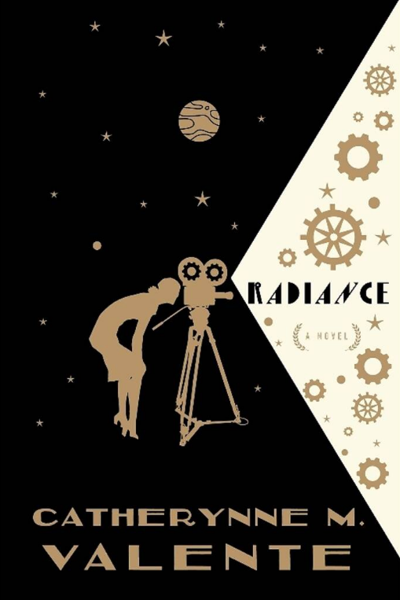
I loved this book. It’s perfect forever. My brain chemistry is irreparably altered. You CANNOT read this quickly. That would be like trying to eat an entire chocolate cake. It’s dense, rich, and best enjoyed in small bites.
I don’t even know where to begin relating everything I liked about Radiance. Here’s what the dustjacket flap says: “Radiance is a decopunk pulp SF alt-history space-opera mystery set in a Hollywood—and solar system—very different from our own.”
Yes, yes, yes, and yes. Radiance is what if the pulp writers were right. What if the solar system was teeming with life, every world a lush landscape, every alien shore a frontier? What if Hollywood was on the moon? What if, through peculiar clashings of industry and politics, films were gray and silent long decades after the invention of voice and color?
What if there was a girl named Severin, born as heiress to this Hollywood? What if she was determined to bring everything to the big screen she felt it lacked: color, voice, and unflinching truth? What if she and her camera traveled to each planet, recording the real and wondrous?
What if, one day, she swam in an alien ocean, exploring the ruins of a town where everyone vanished overnight? What if she took in the only surviving orphan of this calamity and was his mother, over a few hours that constituted eternity? What if she then left him, taking her camera, to meet the void’s gaze?
What happened to her, when she vanished?
The Wild Robot by Peter Brown
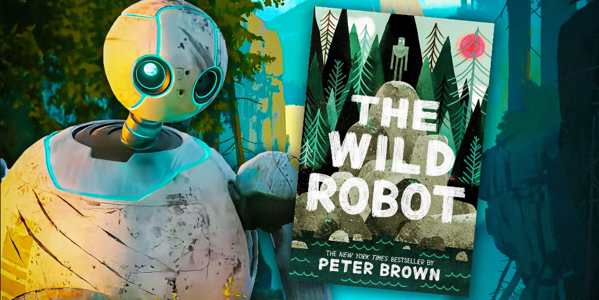
A cute middle grade book about a robot who was accidentally lost on a forested island. She makes friends with the local animals. I hadn’t known this got made into a movie, but my husband recognized it from that.
The Hunger Games by Suzanne Collins
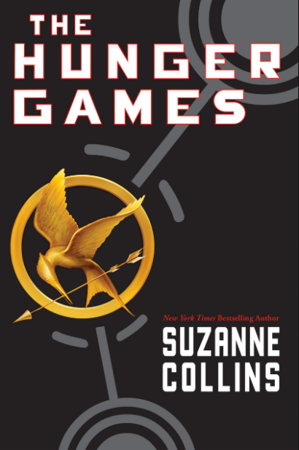
Yes: I really, for real, had not read this book before now. Since I’d been told the plot and made to watch the movie, I felt like I already understood everything that happened in the story. Mostly, I did. Except it surprised me how much food is in The Hunger Games. Katniss’s meals and her efforts to secure them were like, 60% of the wordcount. That’s the spoiler that would have made me want to read this for a reason other than “I needed audio books for a road trip and this and The Wild Robot were the literal only science fiction ones my entire library system had.”
What Collins most impressed me with was her deftness in putting moral values in Katniss’s mouth. Again and again, Katniss unequivocally asserts that the way her society is run is wrong, that the games are evil, the way the capital treats the districts is evil. This always landed, though it was coming from a teenager who’d never known any other life. Makes me wonder what she was doing in school, or why District 12 even had public education, if not for propaganda. That part of the world seemed less well thought out. What really shined was all the production and pizzazz around the games themselves.
I walked away kind of meh on the experience, but only because too much of the last part of the book was Katniss being confused about her feelings for Gale and Peeta. Like, girl, it could not matter less. And the climax had werewolves? If the werewolves were in the movie, I completely forgot them. Anyway, overall, I can see why so many people love this series. It’s one of the few things that both my spouses have read. Maybe I’ll pick up book 2 someday, though I’m plenty satisfied with my wife’s cliffsnotes version of what happens in the rest of the series.
The Fury by Alex Michaelides
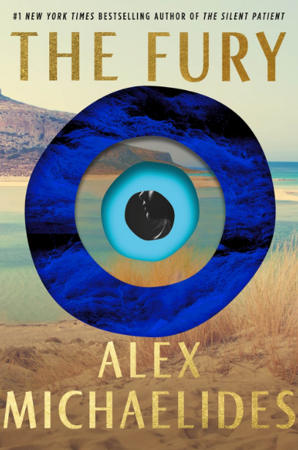
This was the least thriller-paced thriller I’ve ever read. Maybe only the least because I haven’t read Michaelides’s famous debut, The Silent Patient. Because it struck me that this book is rather like that. In both, we have an unreliable, mentally ill narrator with neglectful parents. He engages in a relationship with an abusive woman, while obsessed with a different woman. The plot, ostensibly, is centered on a shocking murder with a mysterious perpetrator. Not that you can’t figure out the twist early in.
The problem I had with The Fury is that it’s like seventy-five percent digressions and flashbacks. The framing device is Elliot telling the story, and he meanders through his entire damn life on the way. “Oh, this is really about Lana, so I shan’t talk too much about myself,” says Elliot. “Except for I thought of something else that happened seven years ago that I really ought to share…”
Elliot’s character arc didn’t surprise me in the least. There are supposed to be a couple of twists, but I figured on everything Michaelides had him do, except for a couple of his particularly stupid lapses in judgment.
Besides the flashbacks, the other thing that annoyed me was some of the execution of Elliot’s unreliable narration. He tells us a lot about scenes he absolutely didn’t witness, with special focus on things going on in other characters’ heads he definitely doesn’t know. You can chalk most of that up to projection and appreciate it as characterization for Elliot. Sure, Elliot, that other guy is jealous. That girl was scared. Everybody who tells you you’re an asshole is doing so cuz of their own emotional issues, not because of anything you did. Uh-huh. But the climax of the book hinges on pivotal revelations delivered in exactly this way. So, did Elliot get it right, that final time? Because no other explanation is forthcoming. The book smacks straight into the ending afterwards.
Mostly, I felt like the author was writing as if we were slowly learning how messed up Elliot is. That would’ve given his digressions, flashbacks, and pontification more of a purpose. But my experience was that Elliot was wearing a suit made of red flags with a red flag tattooed on his face and a string of them trailing from his asshole. OBVIOUSLY he’s meant to be the villain. Come on. The end.
I guess the moral of this story is that people with traumatic childhood experiences and mental illness are secret monsters; if they worm their way into your heart, it’s only possible through lies; they’re dangerous, bound to ruin your life? Coughs.
Plus or Minus Forever by Kate Dane
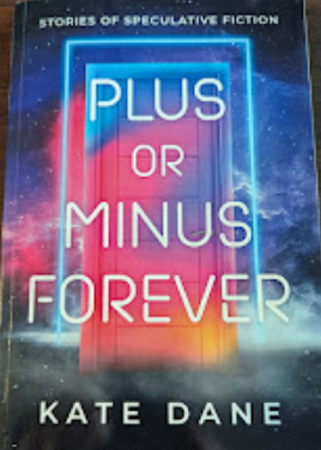
I met Kate. She’s awesome. She gave me a couple copies of her short story collections. I had fun reading these. Five stories, science fiction, with a classic feeling. The “wouldn’t it be messed up if?” genre really appeals to me.
The stories are:
“Plus Or Minus Forever” – An undercover clone works to subvert a tech mogul.
“I Don’t Lose” – Conflict at the space pilot academy.
“Crystal Ball Persuasion” – A man’s doom is read in his fortune.
“We Shall Save The Children” – A dystopia where children are hauled to reeducation for engaging in anonymous speech.
“Woubbeee, Coubee, Goddit” – Ambition and love in a computer-mediated utopia.
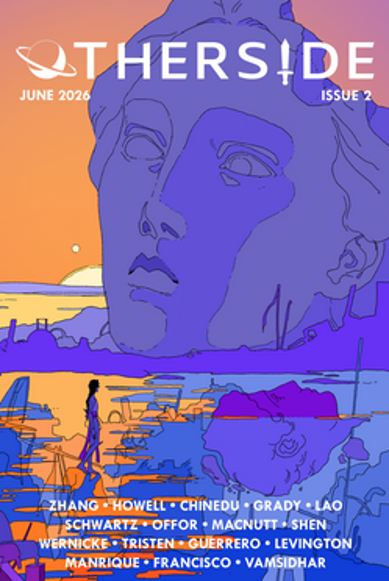
I am sticking this with the books because I read all of the stories in this issue and they’re different genres.
“We Who Have Been Raised By Tigers” – P. V. Vamsidhar
A story about someone haunted by his past life as a tiger princess. Feeling boxed in, longing to be a different version of yourself.
“Before She Knew About Magic” by Joshua Geller Schwartz
Flash fiction about a girl who goes to another world, falls in love, and becomes magic, and what she had before that.
“Two People” by Ben Francisco
A man wakes up to find that his husband has split into two people, and they’re fixated on a surreal objective.
“This Is C(lone)-Pop” by Lia Lao
My favorite story in this issue. About clones, idols, and exploitation, with a twisted love story at its heart.
“Spider Kiss” by Bree Wernicke
Originally in Neon Literary, 2022
A house haunted by spiders and an intoxicating friendship. Haunting.
“Chī Kǔ” by J. Y. Zhang
A pilgrimage to find Knowledge.
“First to Rot” by J. N. Howell
I liked this one. Two people from alien cultures spend the rest of their lives together, alone on an alien planet. About funerary customs and finding peace.
“Crowns” by Cee-Cee Manrique
Flash fiction about being connected to land.
“Remade, Reshaped, Remembered” by Sydney Paige Guerrero
I also liked this one. A girl’s mother was the chosen one before her. It ruined her life.