I challenged myself to read a short story every day this month. Then I procrastinated so hard on submitting my finished work that I blew past this goal! Yay! Anyway, this list is so freaking long. That showcases how much my office job chilled out; I continue to have reading time during the day. Double yay!!
In other news, my house is torn up for decades-overdue renovations. So the other reason I have more time to read is because this drastically reduced the square footage I can feasibly clean. Also, I’m going highkey crazy over this. Messiness makes me neurotic and the contractor screwed up some stuff and now I need to find a new guy and I must’ve made 50 phone calls and it’s freaking impossible to find handymen nowadays and and eurrrrrgh.
C’est la vie.
Nonfiction and essays
“Middle-Aged Reading: Rereading in your Forties and Beyond” by Marissa Lingen
Uncanny, 2026
A nice piece about how life experience informs/shifts perspective. Every story is different on the reread because we come to it as a different person.
“Letters to a Young Writer” by Aaron Zeitlin, translated by Daniel Kraft
I don’t usually log things I read from The Republic of Letters. Zeitlin’s essay is your typical exhortation to ignore the haters, but I was super in the mood to hear it, because I found out that I’m going to a writing conference in October. Currently I believe that, if I showcase my existing manuscripts, people I want to become friends with will be moderately embarrassed for me, and that I must produce a magnum opus inside of two months to earn a place among peers. (I grow embarrassed over not-new stories with the efficiency that raspberries grow mold.)
This became very self-centered. Never mind my trifling drivels. Read more about Zeitlin here.
“I watched my village disappear in an instant” by Arjun Poudel
The Kathmandu Post, August 27, 2026
The consequences of climate change fall disproportionately on countries that are not responsible for it. This is an argument against the existence of a just god.
Poudel’s essay was published the day after the 2026 Nepal-Tibet floods. He lost many family members. It’s awful.
Short Story Collections
Translunar Travelers Lounge Issue 15
Yayyyy this is out and I can talk about it now
Here’s another table of me explaining to my book club why it is fun to read short fiction!! Please read short fiction!!
| Story | Genre | Read if you want something… | Blurb |
| All the Things He Loved Beyond Him by Scott Edelman | Supernatural | Poignant | A man haunts the apartment he died in. |
| Drakelings by Gwen Katz | Cozy fantasy | Cute and short | A couple who run a home for drakelings—immortal toddlers, kin to dragons—are at the end of their ropes. |
| The Pulse of Starlight by Sarah Grace Tuttle | Science fiction | Poignant | A woman has to say goodbye to her starlight wife. |
| A Concerning Lack of Rain in Ambawatte Estate by Moh Afdhaal | Science fiction | Cute | An “AI as people” story. In this one, a farm’s AI cares about a nest of birds. |
| Flotsam by S. L. Harris | Fantasy | Very sweet | I liked this one. It reminded me of the Unico movie I loved as a kid. A little boy ends up in the liminal place where all unwanted things go, much to the bafflement of the caretaker. |
| A Poem of Anas by Renan Bernardo | Multiverse science fiction | Uplifting | The alternate universe versions of Ana pass a message down the line. Ana’s dad has cancer; has anyone’s universe come up with a cure? |
| The Fall of the Automatous Abbey by Maria Haskins | Science fiction | Is there another good word for “dealing with grief” besides “poignant”? | This is like that Tchaikovsky book, Service Model. But in space. A robot religion’s abbey was bombed to ruins. The last janitorial bot still looks after it. |
| That Summer at Aunt Jackie’s Alpaca Farm by Wen Wen Yang | Fantasy | Cute | A witch’s alpaca ranch almost experiences a burglary. |
| A Duet of Tears and Laughter by Jo Miles | Fantasy | Bittersweet, hopeful | Two villages, a world apart, watch each other through a lake. |
| Fame Cycles of Pop-Gods by Cressida Roe | Futuristic fantasy | Bittersweet | Deification and idol culture intersect. I liked this one. |
| One, Two, Inside, Outside, Twist by Beth Goder | Crossworlds fantasy | Poetic | Beatrice peers at her other selves who live in more exciting worlds. |
| Walking the Dead Zoo by Lane Robins | Postapocalyptic fantasy | Hopeful | A witch researcher visits a zoo to meet her dead kin. |
| A Rényú-Hunter’s Guide to Playing Go Fish by Adeline Wong | Dystopian science fiction with romance | Contemplative and sweet | Because Jess is in love with Chloe Zhu, she invites her to go fishing for a rényú. |
Short stories – Science fiction
“Prompts for a Perfect Daughter” by Ai Jiang
Future Tense Fiction, 2026
The premise is that there’s a brain implant, called the Prompt System, that controls subjects’ behavior. And people are doing this to their kids. The main character experiences the implant’s commands as Chinese aphorisms her parents picked to guide her, echoing in her head, constraining her behavior. We see plenty of instances where mind control = bad. The prompt system is introduced through seeing another girl having a screaming breakdown after she tried to take a forbidden action: going outside unsupervised. We’re told she has psychiatric issues even after her parents remove the implant. We also see the main character get manipulated by a peer, a bad influence, using her prompts.
But then the story ends with the main character, years after running away from home, realizing the benign intent that existed behind her parents giving her the mind control implant. I gotta admit that the arc of this story did not track for me, even after reading the response essay here. I guess I just can’t be sold on “Wow I’m so grateful to realize this implant was an expression of my parents’ care for me” after “The implant gives people mental health crises and is used to force workers to be more productive.”
“The Assumption of Maria” by Max Gladstone
Lightspeed, 2026
This is from one of the How You Lose The Timewar authors. A cyberpunk neo-noir story about a detective hired to find out what happened to a megachurch’s CFO. Dense and twisty. I’m not usually one to ask for more exposition, but lots of reveals here were delivered via characters dialoguing leaps of logic.
“Six People to Revise You” by J. R. Dawson
Uncanny, 2025
This is an introspective story about queerness and self-acceptance. The speculative element—a procedure that alters people’s personalities—is entirely offscreen. Spoilers, the MC doesn’t go through with it.
“Missing Helen” by Tia Tashiro
Clarkesworld, 2026
Up for a Hugo. The story’s about a woman whose clone gets together with her ex. Really, it’s about how experiences shape identity.
Clarkesworld, 2026
Another Hugo candidate. And Nebula candidate and WFA candidate. Locus winner, too. I liked this one. It’s about an old man who’s obliquely telling you, visitor to his (fascist) country, about the unspoken rules you must understand. We’re doing surveillance technology here, so the feel is very classic.
“Duane Arnold” by Tomás Bjarthur, 2026
This one was confusing at the start but then gripped me. The narrator’s ex-boyfriend has vanished off to a Project Manhattan-type deal, as she discovers. He’s working on a new Arthur. Arthur is the AI who is going to make us all obsolete by designing the AIs who’ll run the future.
This story is running with the idea that sentient AIs actually exist and can be moral agents, which, eurgh. But it’s got the kind of slowroll presentation I generally find compelling.
“Into Your Sun-Blessed Life” by Isabel Yap
Reactor, 2026
Dea is one of several students participating in a contest to translate and perform excerpts of their people’s holy text for a panel of the imperial invaders from offplanet. The author’s doing some kind of parallel with the relationship in the text and Dea’s relationship with the ex-friend she misses, also a contest participant. Normally I like ambiguity, but my autism really kicked in on this one. I need someone else to explain how much romantic tension was supposed to be here.
Also, regardless of how good this story is or isn’t, I like it when there’s more science in my science fiction. Here it doesn’t matter that the invaders are from space.
“Alien Boy” by Fawaz Al-Matrouk
Reactor, 2026
The human parts about this story are compelling. A boy and his father are refugees from Kuwait. The boy’s mother and her family died in a bombing.
And also there are aliens. (Pulp fiction flying saucer child kidnapping aliens.) Sure, okay.
“The Fastest Martian Mile” by Thoraiya Dyer
Reactor, 2026
Miron is a middle-aged Martian man who can’t return to Earth. He and the rest of the cast seem to have novel levels of backstory. In fact, this is mostly backstory, worldbuilding, and sci fi exposition. The action is that Miron needs to know whether his son died in a terrorist attack, so he runs somewhere he can email Earth from.
“The Imaginary Feast” by Tehnuka
The Daily Tomorrow, 2026
This story was excellent. It’s framed as a message sent to a man named Gary, whose circumstances and family situation become clear as the narrative develops.
Some time ago, when the Tamil narrator was a child, locust people came to Jaffna from the stars. In the beginning, they were his/her neighbors, welcomed with virunthōmbal hospitality. The hospitality wasn’t the problem, though the locusts ate voraciously and cultivated nothing. The ethnonationalistic war that targets the locusts, as well as anyone who’s lived alongside them, becomes the problem.
“Commensalism, or the Labyrinth’s Vessels” by Albert Nkereuwem
Will This Be A Problem?, 2025
A man makes friends with the thing that assimilated humanity and persuades it to create a better world.
Originally from Deep Dream: Science Fiction Exploring the Future of Art, 2024
This one was interesting. Hard science fiction about conscious spaceships creating art in a distant future.
“Become of Me” by Veronica Roth
Reactor, 2024
An android writes her daughter, yet to be assembled, a rambling, navel-gazey letter.
“Fish Taco Tuesday” by Bruc Lockley
The Daily Tomorrow, 2026
I liked this story. In a post-apocalyptic community in Spain, the person who mans the public radio welcomes a caller to the neighborhood and tells them how to fish.
“The Spacefarer’s Guide to Connecting with Your Daughter’s Descendants” by Stewart C. Baker
Adventitious, 2026
Cool premise. A woman’s daughter ejects from their ship as they travel through hyperspace. When Mom catches up with her, a lifetime has passed.
Neon Dystopia, 2026
A trippy cyberpunk story about implants, drugs, missing persons, censored history, and failed revolution.
“Ladd’s Robot Repair” by David Anaxagoras
Lightspeed, 2026
A postapocalyptic cyberpunk about a child scavenger’s dangerous encounters in the hellscape of a ruined city and the deteriorated butlerbot he runs across. Reminds me of Service Model.
“Where the Wild Things Grow” by Osahon Ize-Iyamu
Future Tense Fiction, 2026
I really like this one. I spectate housing solutions the way other people watch sportsball. This story is about an architect dedicated to realize her mother’s vision of Living Homes— Affordable houses that incorporate plants into the architecture.
In RL, incorporating living things into walls and ceilings is a total nightmare—plants die, plants can’t be dry, plants grow unevenly, plants attract bugs—but I have a cute MG fantasy I’m writing where magic pulls it off.
The response essay goes into city planning in Abuja, Nigeria (the setting of the story), which is a topic I find endlessly fascinating.
Reactor, 2025
An old woman stills runs the Enchanted Jungle, a roadside tourist attraction in the Everglades that features the Parrot Tree; the Alien Contact Beacon; the World’s Largest Ant Farm; the Dinosaur Trail, and the Mangrove House; all made by her parents and their friends.
Basically, she walks through the park so we can see all of the attractions, and then aliens show up for real. This is the second Florida alien hivemind story I’ve read all year. Are Florida authors okay??
Short stories – Fantasy
“Because I Held His Name Like A Key” by Aimee Ogden
Strange Horizons, 2025
First this story struck me as odd because the fey king narrator has that “new classical” style that puts me in mind of how fantasy books twenty years ago (or maybe I just haven’t read in this genre for 20 years) like to write immortal characters. Fey, vampires, etc. Copy and paste formal kind of register. They talk like midcentury letters. Anyway, I got off track with my thought—the fey king sounds like that but the opening scenes are him describing a mortal youth who’s very much a contemporary character. The old-guy-letter prose is telling us about the physicality of a young man while hitting fanfiction beats.
Secondly this story struck me as odd because the young guy turns out to be historical actual person Alan Turing. He sleeps with the fey king, goes home, keeps coming back, etc. This is way too adjacent to RPF for me. I think I tolerated The Ministry of Time better because its historical guy Graham Gore was filtered through the additional medium of a TV show. And also Gore’s been dead for longer than Turing has been.
I don’t write historical fiction. If I did, my policy would be to never write something that casts a once-real-live-person as a character in the context of such intimacy that I’d be embarrassed to own it to the real guy’s face. It’s like. Big uncomfy. I, personally, would be mortified if someone else wrote about me having sex, especially with their OC.
“Tymer, Tymer” by Patrick Hurley
Uncharted Magazine, 2026
Wait, this is Calvin & Hobbes fanfiction! That’s allowed??
It’s also a reverse-soulmate-countdown AU fic. Okay… The premise is that an adult Calvin hallucinates a tiger-themed clock next to the heads of his girlfriends, counting down to when their relationship will inevitably end. This is the fate of Susie Derkins.
It ends with Calvin having a conversation with an extremely OOC Hobbes who’s like…the dark id haunting Calvin’s soul now, I guess.
That goes like this:
“If I am afraid, so are you. I am you. A part of you, anyway. The gifted part.“
““You always had a bit of an ego. Are you where all this”—Cal waved his hand about the workshop— “comes from?”
“Pampered work-release visits from a cage of shadows. Like an old, crippled lion napping in a zoo. That’s not freedom. That’s a prisoner being let out to wander the yard. I am so much more than a muse.”
Alrighty then…
Also I’m pretty sure the title is referencing Petra Erika Nordlund’s comic, Tiger, Tiger. My kid’s been holding our library’s copy hostage for like a year now.
“Guillotine” by Max Franciscovich
Strange Horizons, 2026
An intense, intimate, and erotic story about mental illness, self-harm, queer identity, and trauma. Sydney slips into the lives of different versions of themself—lives and deaths. The past self they experience most intensely is the Sydney who was guillotined in the French revolution. Through it all, their fate is tangled with their college lover.
People who liked You Weren’t Meant To Be Human will and/or Les Mis fanfic will like this one. For me, it was an interesting intersection of stuff I understand, but can’t connect to, with stuff that may as well be totally alien. Gonna be really shallow here for a second, but I think my strongest reaction to this story is that there hasn’t been a college lover in the history of ever who’s worth living with unwashed dishes for. Which is just about entirely beside the point of the narrative themes.
“Sarah Ogoke and the Urban Legends” by Amanda Ilozumba
Omenana, 2025
Simweko is a researcher searching for stories that others tried to erase.
“When You Give a Dokkaebi Taco Tuesday” by H. H. Pak
Clarkesworld, 2026
The dokkaebi is impersonating the broom of a shopkeeper whose family it’s supposed to curse. There’s a funny bit about geese.
Reactor, 2024
More Everfair. King Leopold, haunted by the ghosts of all the people he genocided, tries to have them exorcized. This is written from his (super racist!) POV.
“The Goddess of Not Enough” by Susan Palwick
Lightspeed, 2026
A lovely short story about a woman who, rejected by her fairy godmother, develops her own brand of fulfilling wishes.
“Songs of the Snow Whale” by K.A. Teryna, translated by Alex Shvartsman
Reactor, 2024
A rotating POV story about five people, sheltering on a remote island through a blizzard, who share stories about magic snow whales and their human families.
Short stories – Horror and literary and other
“Not Like Other Girls” by A. L. Goldfuss
Reactor, 2026
An amorphous, people-eating Ocean Thing tries to be a guy’s girlfriend for a while. It finds that skin doesn’t suit it.
“Room 602 at the Hotel In-Between” by Georgina Kamiska
Nightmare, 2026
A story where the main character is sucked into a malevolent hotel that feeds on people who can’t decide where else to go.
GigaNotoSaurus, 2025
I liked this more than I thought I would. In a monastery that serves dark gods, one of the servant Jacks waits to be sacrificed. Surprised me at several points. Content warning blackout bingo.
“Full, Empty Houses” by Plangdi Neple
Kaleidotrope, 2025
A man makes a bargain with a sorcerer for the power to take revenge on the person who ruined his relationship with his lover.
“The Language we have learned to carry in our Skin” by Shingai Kagunda
Will this be a problem?, 2025
A reporter takes a vita parasite under her skin.
“Marcie Safe and Sound” by Natalie Paris
Trampset, 2026
A woman is found dead in her car. I really liked this one.
“Turned All To Silver Screens” by Madeline Ashbey
Reactor, 2026
Reactor has this tagged as dark fantasy, but I don’t get it. Seems more like alternate history to me. Anyway, I really liked this one. It’s very much written for people who know about Hollywood in 1956-1957, and while I’m not in that camp, I was swept up by the protagonist’s quest to recruit actors to make a movie happen. I vibe with stories about groups of people working together.
“Can’t Rain All the Time” by Merc Fenn Wolfmoor
Gavagai, 2026
I loved this one. It’s a neo-noir thriller about the mafia, a time loop, inevitable murder, and a girl who wants to run away with her dame. I was riveted.
Books
Space Opera by Catherynne Valente
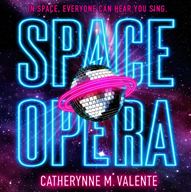
Yayyy this book is “aliens do Eurovision.” I’ve seen the “aliens judging whether earthlings deserve to exist” trope before, but seldom in this “battle of the bands” variation.
The plot is thin. But do you really want the plot to be thicker when the prose is basically a solid brick of adjectives? Actual line from the main character’s introduction:
“Once upon a time on a small, watery, excitable planet called Earth, in a small, watery country called England (which was bound and determined never to get too excited about anything), a leggy psychedelic ambidextrous omnisexual gendersplat glitterpunk financially punch-drunk ethnically ambitious glamrock messiah by the name of Danesh Jalo was born to a family so large and benignly neglectful that they only noticed he’d stopped coming home on weekends when his grandmother was nearly run over with all her groceries in front of the Piccadilly Square tube station, stunned into slack-jawed immobility by the sight of her Danesh, twenty feet high, in a frock the color of her customary afternoon sip of Pernod, filling up every centimeter of a gargantuan billboard.”
Of course I loved this. My policy is that purple prose can have a pass if there’s a punchline.
The nutshell is that Daneh Jalo, aka Decibel Jones, a washed-up, middle-aged has-been at the time of the alien invasion, saves Earth via the power of rock. Largely despite himself. Also, this book is very queer. Danesh has a lot of alien sex that wouldn’t count if you’re Catholic.
Most of this book is actually Weird Alien Worldbuilding, as if Valente was in a competition to outdo herself. As always, her visual descriptions are evocative as hell.
The themes about what it means to be human or sentient or even to just keep breathing in the face of cruelty-prejudice-catastrophic-loss are poignant.
The Princess Bride by William Goldman
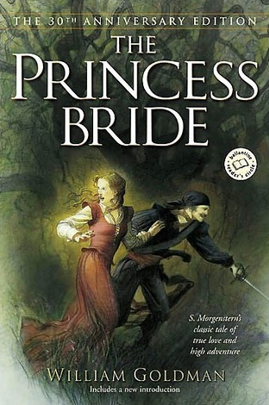
Book club pick. This won over Fellowship of the Ring. Good—I’ve long since heard enough about hobbits and elves. TPB is very readable. I had no trouble getting through it even though I didn’t, strictly speaking, care about anything happening. Buttercup and Westley’s romance is obnoxious. I would’ve left him dead.
I guess Inigo can hang. He was alright.
The Everlasting by Alix E. Harrow
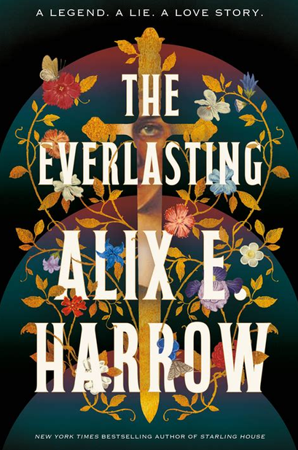
Yeah, alright, this book is as good as everyone says it is. Don’t let the time travel scare you off—it’s vibes-based. You super don’t need to keep track of the loops.
I’m going to call this my favorite romantasy going forward. A historian is chosen to go back in time and record the last quest of Sir Una, the lady knight whose feats helped her queen found the Republic of Dominion. This story is 75% about the love between the historian and Sir Una and 25% about the politics and history of Dominion. Really, it’s about mythmaking. Time travel as the hands shaping the past like clay into a mold from which to pour the future.
Metal from Heaven by August Clarke
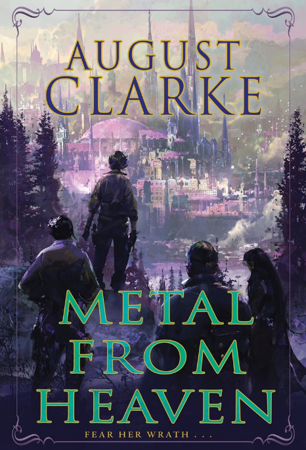
This is kind of two books in a trench coat, but it’s all from the POV of one main character, so I forgive it.
We open with Marney Honeycutt’s family leading a labor protest. They’re factory workers who shape ichorite, divine metal (put a pin in this—there are eldritch elements in the setting), and that metal has gotten into little Marney’s veins and made her sick. Her parents and older siblings are demanding better working conditions. So Chauncey, the big boss, has them all shot.
Marney survives. She manifests a power to control ichorite. She manages to run away and get on a train, where a lesbian biker gang of outlaws adopts her during a heist. They’re running a secret socialist commune out of the territory of a duke whose murder has been concealed for years.
Marney grows up there and becomes a young “boy crawly”— A butch woman who loves other women. She joins the gang and does train heists where she uses her ichorite powers to peel the metal cars apart.
Then the second half of the plot kicks in with a competition for marriage arc. Crawlies are social outcasts, but it turns out that basically every important family in the fantasy world has produced a lesbian heiress. There’s one per country, one for major religious groups, and big boss Chauncey’s sole heir is also a lesbian, and her chief engineer (who she sleeps with) is too. They’re called the Lunarist society. Marney joins, staying at a Chauncey estate in the guise of the dead duke’s dead daughter, competing to win the heart of Chauncey’s heir— So she can get close enough to kill her father, avenging her slaughtered family.
With me so far? That’s a lot.
This book is narrated by Marney in a very visceral-details-forward style. We’re constantly hearing about how things feel or smell or taste or taste or etc., and in like three different ways per description. Marney won’t say, “There was a table in the center of the room, set with silverware.” Instead, it’s, “Gleaming burnished varnish reaches my nose and the stink of mahogany takes over my senses. The echo of its weight, and the life-sap of the tree that it once was, sings in my ears. A dominating surface, smooth and implacable, hosts a full complement of table settings, with enough silver to mint coins for a kingdom.” Marney’s powers also give her vivid hallucinations and make her sick in the aftermath, so that’s a whole ‘nother dimension of sensorium.
Also there is just so much sex and just so many characters. I haven’t even mentioned something like ten women that Marney sleeps with. This is THE book if you want to read about tattooed lesbian outlaws having sex. There are just so many lesbians all around. Like, I enjoy the characters, but I needed a wiki to keep track of them. There are three scenes that each introduce a ton of people at once.
Thematically, this book is a lot like Works of Vermin. But I think Works of Vermin had much better focus. I’m grateful that the obtuseness of the purple prose in MfH does improve as the book goes on. Also, the book does come to a satisfying enough ending. I would say that the book’s most fixable issues are: 1) the character glossary is just a list of names, no details; and 2) there is no map for the fantasy world. A map would’ve super helped with the part of the plot where there are suddenly eleventy lesbian suitors doing wars, imperialism, and genocide.
I’ve managed to elide the core of the story. Marney’s narration is addressed to her lost childhood love. That girl’s phantom haunts her whole life.
Comics
Muhammad Najem, War Reporter by Muhammad Najem and Nora Neus
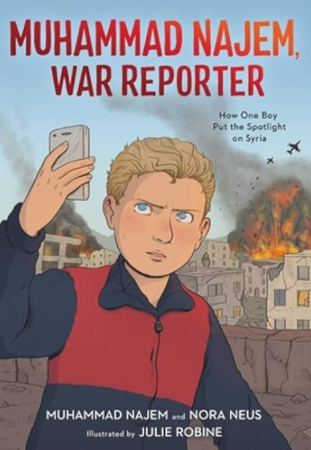
A middle grade graphic novel written by Muhammad, with help from a CNN reporter, about his life in Eastern Ghouta during the Syrian Civil War and his quest to document the human cost for a western audience. He hoped that, if the suffering of children like himself was exposed, the global community would unite to save them.
Heartbreaking. Foolish. I deeply, deeply respect him for it. The world would be a better place if more people were moved by the passion of Muhammad Najem.
There’s discussion online about whether this book is appropriate for children. This book is about the lives of children. Millions of them. It’s about them, it’s for them. End of.
One of my favorite reads of the year.
In the Bleak Midwinter by Kat and Ali

Shockingly, I’m enjoying this soulmate story. I hate soulmate stories. However. This is also a post-apocalyptic sci-fi about revenge cycles, endless war, and cyborgs. And the heroine’s soulmate is barely in it. The core relationship is her enemies-to-friends arc with his brother. The brother’s the one on the banner!
Also the art’s great.
(Chiseljaw McGoodHair up there is my fave and he’s definitely falling for the heroine, despite the magical wrist numbers dictating that she’s supposed to end up with his little brother. I’m somewhat wary of where the author’s going to take that. I don’t like jealousy plots. I guess my fave character will probably permadie to clear the board?? I’m all for that; I love a good character death.)
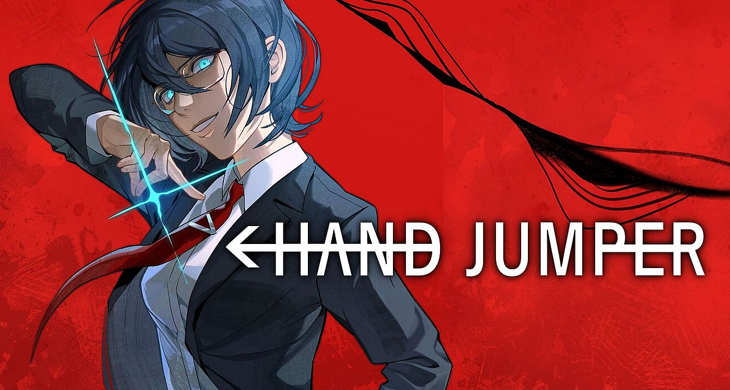
God damn this comic is good. Sayeon Lee might be my favorite villainous heroine ever. The premise is X-Men-esque: people descended from demigods have a chance to develop a superpower. If they do, they can only live in society through conscription to the Aberrant program, where the government treats them as disposable cannon fodder in an ongoing domestic war with Aberrant gangs. Sayeon Lee’s mother ran one of those gangs. Now, her mother’s dead, and her older sister has taken over.
Sayeon renounces this criminal lifestyle and Aberrancy— But, right before she graduates high school as a top student, her aberrancy manifests. Her high-achieving ambitions are crushed, her hard work in academics wasted, and the program kills her best friend; he’s too weak an Aberrant to be of use. Now, the only success Sayeon’s permitted to achieve is advancing in the Aberrant program. She aims to work within the system to avenge her best friend’s execution.
In the meantime, she’s a low-tier grunt and a bookworm who suddenly has to fight gangs, infiltrate cults, and work alongside other government Aberrants, who have powers like exploding things with their minds and summoning glowing swords.
I called her villainous earlier. That’s because Sayeon is incredibly Machiavellian. Manipulation is the main tool in her kit. And her power encourages this strategy: Sayeon can rewind time. Through an ongoing charade about the true nature of her power, she uses her position as team leader to puppet the other Aberrants into furthering her goals, all while suppressing her own conscience. When she gets one of her teammates killed, she rewinds. When someone discovers her machinations, she rewinds. When she has a heart-to-heart with a peer, she rewinds, and walks away with their secrets while erasing their memory of hers.
I find this character type incredibly compelling to watch.
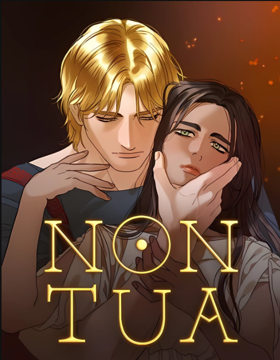
This is a Webtoon by a Korean author that’s set in ancient Rome. Vibia Prima is a priestess of Vestia. She’s kind, charitable, and a true believer of good works. By misfortune, she attracts the attention of the Princess Julia, who has been twisted by lifelong abuse in high society. Julia sadistically maneuvers to kill other women whom she perceives as social threats. (It’s sort of a, “I need to keep killing the people who notice that I’m killing people,” situation.) Vibia is sucked into Julia’s sordid history and relationships as Julia charges a male courtesan with manipulating her to her doom.
The setting is clearly researched and the art is gorgeous. Those things help sustain my interest through the kind of dramatic, romantic, relationship-driven plot that I usually need a more in-control protagonist to anchor. Poor Vibia has preserved her life so far, but she keeps falling victim to the antagonists’ schemes. And I super don’t care about Vibia’s budding romance with the male courtesan and/or Vibia’s alternative budding romance with her bodyguard. I just want this poor woman to not lose her career or her head!!