Carrion Queendom is premised by two magic-driven apocalypses. In the modern era, the tapheosis’ curse took hold in living memory, destroying the fae Monsoon Court and transforming its jungle into a malicious superentity. Because the two main characters were born adjacent to this wilderness, I put a lot of effort into its design on the backend. (The book doesn’t reveal the superentity thing until the last act, unless you can read between the lines when the slaverharts, hunthands, and their controlling cordcloaks are introduced in chapter five.)
Lt. Kieran Bauer and Isoline, the hero and heroine, both have strong connections to the jungle. Kieran thinks of it as central to his childhood, while Isoline’s basically a fae Tarzan (except instead of having a gorilla family, she fights monsters). They meet in the jungle, when Kieran goes looking for Isoline in chapter two. This early scene establishes a bare sliver of the worldbuilding and creatures that will later be pivotal, and mostly serves to show how comfortable the MCs are in a hostile, alien environment. This tells us a lot about their shared brand of crazy–
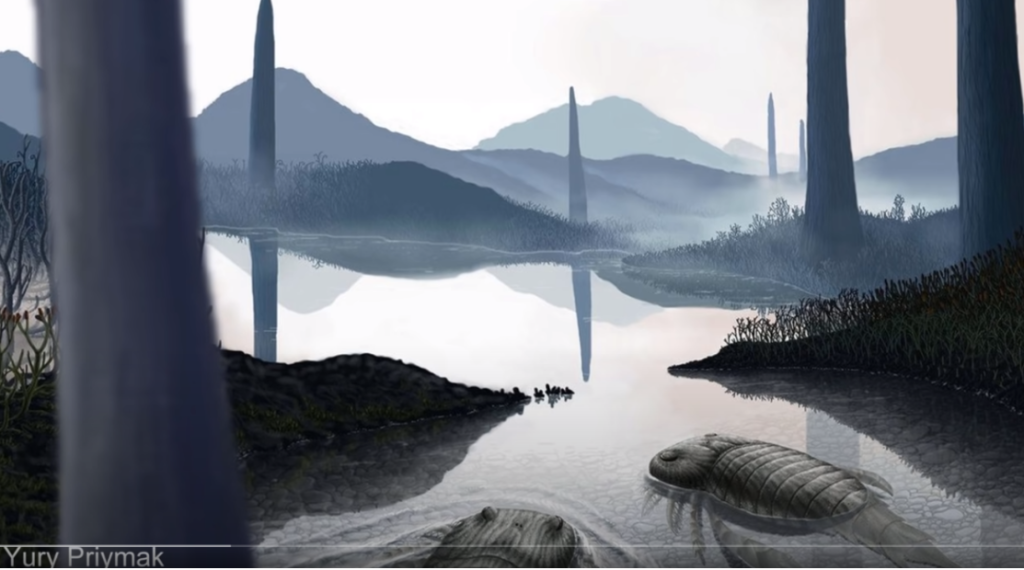
Because the Horn Jungle is lethal. The proud hornbeam trees with their staghorn flowers are transformed, eaten alive. The deerlike slaverharts echo their memory, but their trunks now serve as skeletons for colonies of devouring fungus. Fungus is the theme of the jungle’s era of unlife: the trees have been replaced by conical lysones and branching saprovores (inspired by prototaxites). I referred to artist’s depictions of the Devonian period when designing these, particularly paintings by Yury Priymak, whose work I’m struggling to find online now that I’m trying to cite him.
From my notes, “the jungle is composed of massive mycelial basins that funnel carrion, both magical and meat, into their webs to feed the central fruiting ‘horns.'” Isoline knows this because of her innate sense for magic, though it’s not like she ever goes digging to confirm her observations for science. Also from my notes: “The ecosystem represents a rejection of the sun. No photosynthesis is practiced. All energy is derived from decomposition of meat or magic,” whereas Isoline herself, as fae, thrives in sunlight.
(Also from my notes, the north side of the jungle is supposed to have a bunch of peat bogs, which I forgot to make Kieran slog through when going to find Isoline. Lucky him.)
The jungle is populated by Horned Ones, called that because of their origin, though many do have actual horns. They’re the ambulatory parts of this ecosystem, with animal intelligence. Only some of them–particularly those that used to be people–heed the Horned Lord, scion of the tapheosis. Mentioned in the book are scalloped rats and blightworm. Fettergrass and mandible worms make brief appearances. Kieran kills a few kefflers, slaverharts, and hunthands. Isoline once fights in the form of a barrow lion. And of course hunthands are central to the story, because that’s what Isoline’s brother, Tomeu, is now. Tomeu would’ve been really upset about being turned into an undead, half-eaten thing if he’d kept his mind. All of these monsters are an unnerving combination of the animal, fungal, and insectoid, and many are bigger than should be allowed. Pretty sure Tomeu will still find them icky, even if they’re his kin now.
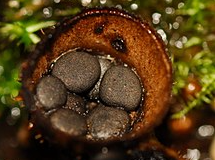
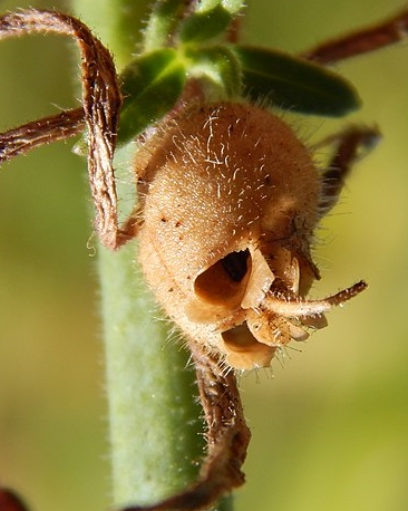
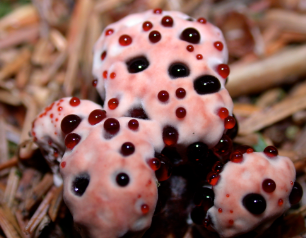
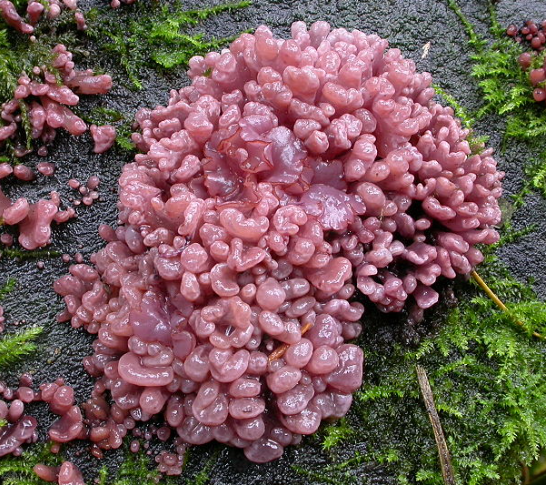
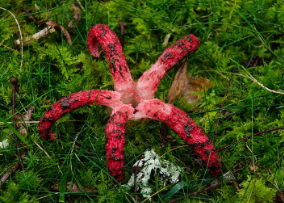
As a last note, here are some of the pictures from Wikipedia I saved, sans captions for what they are or which Horned Ones they inspired: