Man, doing this is suddenly a pain in the ass. It’s not just that I read a lot this month— I’m also logging more essays and articles than I usually bother to. But I don’t want to lose or bookmark the links, so, here we are.
Short stories and essays
“These Stories Teach Us How to Fight” by Dawn Xiana Moon
An essay about resisting fascism in Chicago and how several popular science fiction stories spotlight the warning signs. You might know this author from her music career.
“When Private Equity Destroys Your Hospital” by Cory Doctorow
I’ll take “Things I can’t believe are legal, but of course they are in the U.S.,” for $500, Alex.
““The Trump administration is saying, literally, that they put zero value on human life,” Marshall Burke, an environmental economist at Stanford University, said in an email. “If your kid breathes in air pollution from a power plant or industrial source, E.P.A. is saying that they care only insofar as cleaning up that pollution would cost the emitter.””
“For the past 30 years, the E.P.A. has pegged the value of a statistical life at around $11.7 million. Although experts have recommended increasing the value, the agency has updated the metric only to account for inflation and wage growth.”
Essay from 2021 about antitrust rules, “law and economics,” modeling qualitative factors, and cost-benefit analysis. I was motivated to read this because of the news above.
A woman writes about her view of her family’s experience during Venezuela’s slide into autocracy.
“Collections: Life, Work, Death and the Peasant,” by Dr. Bret Deveraux
This is a five-and-more part series from a historian who teaches at NCSU. (The dude’s CV is seven pages—check it out.) He’s one of the few essayists both my husband and I read; my husband has old white guy nerd interests and I have millennial queer guy nerd interests. Devereaux’s blog hits the overlap. He’s got a lot of articles that are excellent resources for building fictional worlds based on ours, with a focus on ancient and medieval Europe. The “peasant life” series was particularly interesting to me. It’s helpful for some things I’ve been working on.
“Graduated Justice: An Amelia Li Mystery,” by Myna Chang
This is available from both Translunar Travelers Lounge and Escape Pod.
Cyberpunk detective noir where the protagonist is a disabled, middle-aged Asian woman with an obsolete bionic leg she treats like a familiar. She’s a great heroine. I quite liked this take on the genre.
“Accensa Domo Proximi” by Cameron Neil Ishee
I’m finally reading the Grist 2024 Imagine contest winners again. When a story leads with a Latin title, it makes my eyebrows squinch. But the opening is a three-way conversation over an excess of potatoes. After that, I honestly did not expect this to be a story that’d make me cry. It didn’t need the early diversions from its point, but its point—about the seas rising to swallow coastlines; about worlds wiped away; about living with cherished memories of something profound and now lost—is deeply resonant.
This story is very on theme for Doctorow. It’s so short that you might as well just read it, rather than me writing a description.
“Sort of Controversial” by Scott Alexander
Yes, yes, irony. If you don’t know Slate Star Codex or its author, you can skim Wikipedia. SSC was a ‘hub for the rationalist community.’ If you don’t know them either, don’t delve too deeply into that rabbit hole. Though, even if not, you may have seen the term this story coined out in the wild.
This piece is from 2018. It’s very Reddit-brained, but also, near future sci-fi exploring something real that I haven’t seen many authors dive into. The premise is that a woman at an unethical startup is tasked with writing a generative network that, when pointed a community with an online presence, outputs ‘scissor statements’— Basically a memetic hazard. Each statement is toxic and polarizing. It cleaves a given group, with each faction triggered past the point of reason with anger at the other. The other group, if they believe what they believe, must be monsters. And then you get stuck in a spiral thinking about how they’re monsters, obsessed with that monstrousness in everything they say and do.
The startup employees test Shiri’s Scissor on themselves. This immediately causes a massive argument; Shiri is fired. The CEO then showcases Shiri’s program for the US military, hoping for a contract. The narrator doesn’t know whether the generals bite, because the startup soon perishes from its self-inflicted wound.
But, after the narrator’s switched industries, he realizes that Shiri can’t have been the first to invent this technology. Toxic, controversial statements that he knows Shiri got the program to generate in testing, before she was fired, keep showing up in news headlines.
Man, I wrote too much about this one. I try not to engage with Alexander tbh.
“How to escape the well” by Derin Edala
An excellent flash piece that perfectly illustrates a specific, maladaptive mindset. Read this.
“Someone to Feed You” by Abigail Kemske
The narrator’s lost a loved one. Their daughter, maybe. They unthinkingly go to clean her room, for the first time since they began grieving, and discover that the remnants of her—discarded hair, baby teeth, dust—are forming into a vicious little monster thing.
“Donuts from the Daydream Network” by Julie Vee
Awwwww this was delightful. Araminta has taken over her family’s donut shop, since her father’s been in the hospital. She revitalizes the store to make enough money for his care by using a virtual reality network to seek inspiration for new recipes from around the world. This story has several elements I love: supportive family, interconnectedness, a goal-driven protagonist, a hopeful tone, and, of course, food.
A very good sci fi from Thomas Ha, exploring the commodification of human relationships through gig work. “One day, I was hired to be a father.”
“Waiting to Happen” by Leah Cypess
You’ve invented a multiverse mirror— A tool to peer into other universes where accidents happen which could be averted. You record videos to convince people in your own universe to take action before it’s too late. You wish your mother was proud.
But she’s not, and it isn’t even because staring into an infinity of tragedy is destroying you.
This short story was a well-done exploration of a concept through microscenes. Excellent balance with character stakes.
“The Forest Final” by Brenda Cooper
In post-apocalyptic post-USA, Sallie Thornton and her giant robot dog mount are completing a trial to join the Forest Guards.
“My Sincere Apologies for the Demon” by Adrian Ward
An exchange of letters between warlocks. Funny with a dark twist! I really enjoyed this.
“Parthenogenesis” by Piya Patel
Reproductive coercion, religious trauma, mental illness, and body horror. Lot of the same themes as the Andrew Joseph White book I liked last year.
Another Patel story featuring reproductive coercion, religious trauma, mental illness, and body horror. Patel’s good at making your skin crawl.
“‘Brokeheart’ GPT” or “A Superintelligent Being Reads Pat Rosal” by Micaiah Johnson
Sigh. I hated this one. It’s an “artificial intelligence with emotions!” piece. And the emotions are just…human emotions, with some bog standard ‘severed from the hivemind’ stuff going on. Also, it’s curiously anti-topical. The discussion it’s having about AI is not informed by the past 10 freaking years of events. Unless maybe it is, and the author chugged the koolaid. We’re living at a point in history where people breathlessly positing that “what if AIs have thoughts and feelings and are people!!!” doesn’t feel speculative. It feels like dishonest ad copy.
A meditation on trauma, gender, and gaslighting.
“Academic Neutrality” by M. R. Robinson
An extremely powerful, topical horror story. Sent shivers up my spine.
‘Slake’ is such a good word. This is a grisly horror story about someone trapped in their apartment by an endless hurricane, falling apart physically and mentally.
“The Mysterious Study of Doctor Sex” by Tamsyn Muir
This was something like my fifth reread. I love love love love love this story. If you’ve read Gideon the Ninth, or you like Sherlock Holmes-style stories and have a high tolerance for unfamiliar fantasy worldbuilding, read this immediately.
“The Final Voyage of the Ouranos” by Marie Brennan
This story features a universe of floating spheres and airships, wherein physical objects are made from the aether through magic. The Ouranos is basically a luxury cruise ship that breaches a domain where the aether turns ‘wild,’ lashing out to destructively recreate things previously banished or altered. The story is told using two narrative threads: announcements made aboard the cruise ship as its fate destroys it, and flash forwarded scenes about the crew of the cargo ship who eventually discover the Ouranos: floating, derelict, and cancerously warped.
No objection to the worldbuilding, but there was much more of it than I like for a short story.
Books
Knightmare Arcanist by Shami Stovall
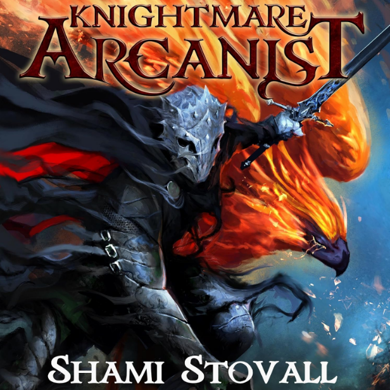
A surprisingly cute YA adventure fantasy. It reminded me of the otherworld creatures in Garth Nix’s Seventh Tower series, which I was obsessed with throughout third grade. The premise is that arcanists prove their worth to magical creatures, bond with them, and gain the ability to share their powers. The organizer of my fantasy book club went nuts for this one.
Comics
“The Greatest Estate Developer” by Lee Hyun Min, Kim Hyunsoo, and BK_Moon

This lengthy comic adaptation of a webnovel just finished. It’s a comedic isekai where the protagonist’s special skill is civil engineering. A great example of the formula that’s fun to read. Also, I have a weak spot for stories with prosocial messaging.
Lloyd Frontera is the useless, lazy, and selfish son of minor nobles who’ve fallen on hard times. Fortunately for everyone, he gets bodysnatched by the soul of a 20-something year old modern Korean. That guy’s greatest ambition is to be lazy too— But first, he wants to get rich. As a civil engineering student, the way he goes about this with his system-endowed Magic Game Powers is building infrastructure to increase the quality of life for residents of this medieval fantasy world.
He’s a superficially villainous protagonist of the “Wish fulfillment: break social norms, solve problems, get rewarded” archetype, so the narrative consistently throws bigger villains into his crosshairs. Not-Lloyd’s underhanded, thuggish streamrolling of them reaps rewards for the downtrodden more so than himself. Running jokes include how each success wins him adulation, but sets him even further back from his goal of an indolent lifestyle. A hero’s work is never done.
My favorite running joke is that Lloyd is canonically hideous. The artist really goes ham with drawing his expressions.
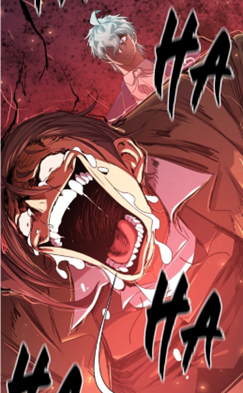
The ending was well executed, so if any of this sounds like your thing, it’s worth checking out.
“The Spark in Your Eyes” by MURO

A high fantasy manhwa with romance and politics. I really liked this one. I find the dynamic of the central relationship compelling, and once wrote something similar—an enemies-to-lovers plot where the heroine’s seeking to make amends with a man she loves, but badly hurt. The story’s art is beautiful. I especially loved the heroine’s character design and her outfits.
The conquering empire of Mormeratta is enjoying an uneasy peace after years of conducting warfare on multiple fronts. The Witch of the Sun, blessed with godlike immortality and pyrokinesis, rode at the head of their armies as a teenager. But, before that, she was a little girl from an indigenous village the empire purged. When she was saved from death by divinity, the emperor had her trained like a gladiator and forced into service.
But now, as an adult, she’s dying. Mysterious pain wracks her body from sundown to sunup. She retires, secluding herself in a backwater castle under an anonymous identity. As a last resort, a pharmacist from the reviled Northern Nations—more victims of Mormeratta’s campaign—is summoned to treat this ‘mysterious lord.’
She gets close to him by posing as her own servant. They fall in love as the Witch learns that she killed his parents during the war. Simultaneous with the weight of confessing to this betrayal, a coup within the empire starts moving, with the Witch in their crosshairs as an ideal scapegoat. This story is finished and the conclusion was satisfying, so I can recommend it to people interested in any of the above. It could’ve been better paced, but that’s true of most Webtoons.

A teen romance starring a girl with severe social anxiety and selective mutism. Her peers tease her for being a robot, so a boy who’s secretly an android approaches her. He’s lost his memories. Can a fellow robot help restore them, so he can fulfill his true objective?
This was cute. The story’s focus really was more on the girl gaining confidence, rather than the foregone conclusion of her first romance. The ending worked.