Short blurb, very busy. Was in Norway half the month. Also trying to write ~3 books simultaneously for no good reason. My critique partner had sympathetic & encouraging things to say about this. (“CRYING” “Bro” “Life is gonna be so tough for you”) Also tonight, in twenty minutes, I am being taught pickleball against my will. My friends are such losers.
Short stories – Science Fiction
“Lyra, From Many Angles” by Hiron Ennes
Escape Pod, 2025
Not my favorite author doing my favorite genre! I saved this as a tab on my phone for over a year, like you save a bottle of wine in the cellar, waiting for a special occasion.
This has sentient, superintelligent microorganisms and their quest to map the stars. Lyra facilitates their journey to the constellation that is her namesake.
“Zhuangzi’s Dream” by Cao Baiyu, translated by Stella Jiayue Zhu
Originally from Science Fiction World, 2013
A surreal piece about the worlds dreamed by a monk in the brief moment where the past and future are twisted into a loop.
“There Are Angels and They Are Utilitarians” by Jamie Wahls
Diabolical Plots, 2021
Exactly what it says on the tin. The butterfly effect writ large, because the angels can see the infinite cascade of consequences from each action. They live the most extreme version of Chidi Anagonye’s nightmare, and it demands that they hold their duty inviolate— Above innocent lives.
The story is about one of the times an angel really didn’t wanna. Because there is a particular little girl she can’t bear to let die.
Strange Horizons, 2019
Another story about utilitarianism taken to an extreme. I loved this one.
Earth is ending via meteor strike. Almost zero chance the experts pull a miracle out of their butts. It’d have to be a titanic miracle. And it’d be shaped like an ark ship, saving only a scant few.
Our main character isn’t one of these experts. He’s a PR spin guy. That’s the tool in his belt, and it’s as good as any other, when the problem isn’t fixable.
“This Is An Emergency Broadcast” by R.S.A. Garcia
Clarkesworld, 2026
Another story that knocks it out of the park. Flagging it as a favorite for the year. This is told like a transcription of the information firehose, bouncing between many sources, and incredibly readable despite that. Garcia nailed what modern life feels like.
“The Portishead Tunnel” by J.D. Moyer
GigaNotoSaurus, 2026
A godlike supersnail creates an underground community for the destitute. There is a narrative arc, but a lot of the piece’s focus is on exploring the fantastical technology comprising the infrastructure of this place. It all constitutes solid wish fulfillment for the era of unaffordable housing.
“Models of Life” by Abhishaike Mahajan
Asimov Press, 2024
A hard science, transhumanist story that starts with a discussion of computational models for organisms. This is a field where AI is actually helpful. Then the narrative extends into the future, extrapolating to the typical transhumanist dreams of technology curing all disease, extending the human lifespan, and conquering the stars.
The part of my brain that remembers getting a microbiology degree really enjoyed this. And I’m super grateful that Mahajan cited sources. Very informative.
“A Game of Three Generals” by Aliette de Bodard
Sunday Morning Transport, 2026
An excellent, dreamy story, set in the far future. A woman in exile on a barren planet slowly comes back to herself, after being kept drugged by the facility AI for years.
“In the Hours Preceding the Fall of Tau-Sants” by Rich Larson
Reactor, 2026
Yay, a new story from Rich Larson. This is a weird biopunk story about two agents of the “Heretic” on a mission to assassinate her sworn enemy. Rich said there might be an entire book in this setting, which tracks, with how complex the worldbuilding is.
I liked the big twist.
“Twenty Thousand Last Meals on an Exploding Space Station” by Ann LeBlanc
Mermaids Monthly, 2021
Right, so, I don’t remotely care for mermaids, and I had never heard of this magazine. But somebody on Discord said this story was great. And they’re right!! I enjoyed the hell out of it.
Riles is a transhuman, aquatic engineer on a space station caught in a time warp. Every three days, it explodes. Her implants let her remember this. After hundreds of iterations, she realizes there’s nothing she can do to stop the disaster. So, instead, she takes herself on a culinary tour.
Until her sister shows up.
“The Seed of a New Dream” by Marissa Lingen
The Sunday Morning Transport, 2026
A professional dream implanter sours on the point of the technology that is her field of expertise. She tries transitioning from corporate advertisement to nonprofit ecology promotion.
“Moby Dick, Ecoterrorist” by James Morrow
The Sunday Morning Transport, 2026
In this world, there are giant sapient aquatic creatures. Mocha the Whale has spent decades destroying cargo ships carrying automobiles with the help of the kidnapped, now cooperative, Captain Abraxis. Who’s sort of grafted onto his fin, I think?
“Dinosaurs Once Lived Here” by Yvette Lisa Ndlovu
Will This Be a Problem?, 2025
A poetic narrative about the arc of earth’s existence.
“We Begin Where Infinity Ends” by Somto Ihezue
Clarkesworld, 2025
I liked this one. An engineering prodigy, to impress his boyhood crush, sneaks out every night to modify streetlights, softening their harsh light to protect fireflies. Their party is crashed by an unconventional girl.
“If Memory Serves” by Kevin Rigathi
Will This Be a Problem?, 2025
I liked this one too! Haike invented memory-altering technology with unsettling applications. Now, he’s terrified to sleep at night, for unknown reasons…
Reactor, 2025
Really like this one. Udo Johnson, a young science communicator, gets to take part in Nigeria’s first space mission. For political reasons, it all goes wrong. I loved Udo. This story will haunt me.
“The Last Optician” by Ann Calandro
Diabolical Plots, 2026
A dystopic story about post-capitalism. Chock full of worldbuilding, especially relative to its length.
“A Dream of Electric Mothers” by Wole Talabi
Originally, Africa Risen: A New Era of Speculative Fiction, 2023
This was a reread. The premise is that a sort of post-life hivemind of mothers has been created through archiving minds in computers. Basically, you can plug in to consult your ancestors. The narrator is a newly appointed minister of Ọyọ Mesi, communing with the ancestors for the first time to ask them for guidance regarding a border dispute. Secretly, she aims to make contact with her deceased mother.
“Blood for a Stranger” by Timothy Mudie
Lightspeed, 2023
Smartships are corporate warships, operated by small crews of uploaded, linked minds. When they were human, they were soldiers. Now they’re under contract—digital immortality in exchange for eternal service. Per opaque orders, they perpetuate warfare to destroy their enemies’ infrastructure and profit. Until they learn more about their origins.
“Rare Spaceships And How To Fly Them” by Jake Stein
The Daily Tomorrow, 2026
There has to be a name for this style— “Multiple blurbs strung together around a core theme.”
Short stories – Horror, fantasy, literary
“San Silvestro” by Tomas Bjarthur, 2026
A priest succumbs to his dark fascination with a female artist who believes she sleeps with an angel.
Tasavvur, 2026
About an unhappy wife of the moon. Deicide and venom.
“Promises, Promises” by Cara Masten Digirolamo
Strange Horizons, 2026
This opens feeling like a sci-fi, simply because there’s an app at the center of the story. A therapist’s patient has disappeared. That young girl used an app that grants wishes. Its founder took a personal interest in her wish, since it was impossible. He pays the therapist a personal visit when she reaches out.
What this story is actually about is wanting the wrong things. Particularly, wanting to be something you’re not supposed to be. This is replete with queer themes.
“Mr. Original Swag” by Victor Forna
Will This Be a Problem?, 2025
I liked the narrative voice here. Mr. Original Swag lures people out of the world.
“Baby Potion” by Matseliso Motsoane
Will This Be a Problem?, 2025
A woman engages in witchcraft to learn why her mother-in-law won’t let her have a baby.
“Close Encounters of the Ethereal Kind” by Zoe Bellerive
The Sunday Morning Transport, 2026
A guy gets a job working for fae.
“Hungry Like The” by E. Catherine Tobler
Lightspeed, 2026
A girl’s brother has turned into a wolf.
Nonfiction, essays
“The End Of Reading Is Here” by Rose Horowitch
The Atlantic, 2026
Pivot past the inflammatory title. This piece is actually about present and historical trends in American literacy, and popular cultural modes for the dissemination of information. The author presents a well-rounded discourse that includes plenty of information that does not, in fact, support the assertion that reading’s going away.
If anything, the existence of young people like Rose Horowitz, who can tear themselves from the social media spiral to go back to books—and to write long essays like this—makes me more certain than ever that reading will bounce back.
Like. We now know that smartphones kill the attention span. We know that overstimulating kids is a drag on them developing reasoning skills and emotional regulation. And by “we,” I mean I’ve met plenty of functionally illiterate folks who’ve gotten the memo, and are taking away iPads to replace them with books. Not to mention the two dozen states getting phones out of schools with or without the parents facilitating.
“Why Procrastinators Procrastinate” by Tim Urban, 2013
This is part of a blog series on procrastination. I have serious nostalgia for the blog format.
Books
Lost In Underspace by Kate Dane
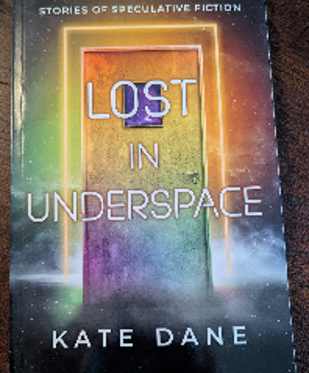
The other book Kate gave me in June. Seven more short stories:
“The Interplanetary Olympics” – A woman’s participation in the first interplanetary Olympics, as a swimmer, forces her to confront her sister’s death by drowning.
“The Dog Who Swam Away” – A story about a bridge that dogs can’t resist jumping from.
“Headliner” – About vampires and mesmerists.
“The Epicurious Star Cruise” – Cannibalism in space.
“Imitation of a Bobblehead” – About mind altering drugs and morality.
“The History of Your Life is Our Bones” – An uprising of ensorcelled, enslaved animals.
“Lost in Underspace” – A pilot’s former comrade charges him with ferrying a politician
The Ministry of Time by Kaliane Bradley
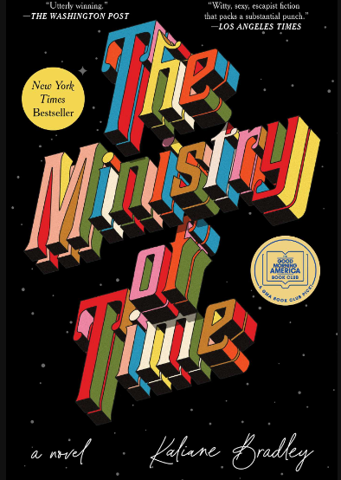
Well, this sure was a book written by a woman on tumblr who became obsessed with historical side character Graham Gore after watching The Terror (TV series, 2022).
Gore is a real guy who died on a Royal Navy expedition, 1845-1848, to find Britain a shipping route to Asia via a Northwest Passage through North America. Two big ships got stuck out on ice that didn’t thaw for a couple summers. By the time that the remaining survivors decided to abandon ship and make their way south over land (this effort ended someplace called “Starvation Cove”), Gore had already died.
In The Ministry of Time, however, he’s fished out of the past, alongside a handful of other “expatriates” from varied points in history. My favorite of these characters was the lesbian rescued from the Black Plague who’s thrilled to discover twenty-first century feminism. And clubbing. The expatriates each get assigned a “bridge”—a civil servant to be their companion—in order to help them adjust. For timey wimey reasons, failure to integrate socially into the present day will cause them to diminish in physical reality. Or explode, a bureaucrat speculates.
The real reason for this setup is so the narrator can move in with Graham Gore immediately.
The novel frontloads a “they were roommates” fanfic plot as the first act. That was entertaining enough to read. I’m also on tumblr, so the humor in the dialogue hit for me. And, when I was a kid, I liked to pretend that I could meet historical figures and explore the modern day with them. This was a way to fantasize about 1) having an adult pay attention to me and 2) having something to contribute to the conversation. “Those wires are called power lines!”
Never wanted to snog any of them, though.
Gore admits to falling in love with his unnamed bridge in a scene that must feel abrupt if you didn’t realize it was a foregone conclusion. A bit after this, the background spy plot becomes foreground, and we end up in a thriller.
This book was ambitious, heartfelt, and sometimes stuck the landing. Through the lens of the narrator being white-passing British Cambodian, there are discussions on colonialism, imperialism, assimilation, and institutional racism. These discussions perhaps did not evolve the depth the subjects were due. Also, I admit to really struggling to follow the cause and effect in the spy plot, despite liking the main twist. The logic of the speculative elements, and the antagonists’ actions, didn’t always track.
Since the plot-plot doesn’t hang together well, I suspect that a lot of this book’s popularity is down to what a revelation fanfic!Gore must feel like, as a male love interest, to readers not coming from the fanfic world. Gore and the bridge sidestep the Man-Shaped meets Girl-Shaped tropey pitfalls that a good chunk of the tumblr fanwriting community vocally resolved to avoid. The kind of stuff that made me decide I didn’t like romance novels when I was developing my tastes in the early aughts. (You know: The man is the most masculinely masculine gruffest shadowdaddy, and the girl is wilting and fragile and uncertain of herself, or else saucy and sassy and flustered, and either she shall civilize him with her shining good womanliness, or her attitude will seduce him into validating her humanity (via wifeing her). Also, he’s sexually threatening and that’s hot. That stuff.)
(Not coincidentally, Gore and the bridge are both written as bisexual, and virtually the entire secondary cast are also queer. Ngl, I enjoy a bi for bi romance.)
Witchcraft for Wayward Girls by Grady Hendrix
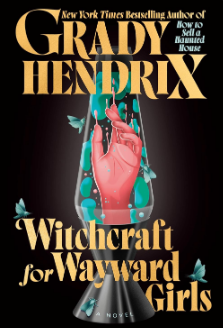
My fantasy book club looooooooooved this book. I thought it was just kind of okay. Glad I missed the meeting for it. The main plot element is pregnancy body horror. That would’ve been rough to talk about; it’s a huge squick for me.
What surprised me: Satan isn’t in this book and the witchcraft shows up late!! Via library bookmobile, okay… Anyway, this book is mainly about what it was like to be teenaged and pregnant in 1970, pre-Roe. Huge focus on the historical and social elements. The afterword said the original drafts didn’t have witchcraft at all. I can totally see that.
The Hollow Boys by Douglas Smith
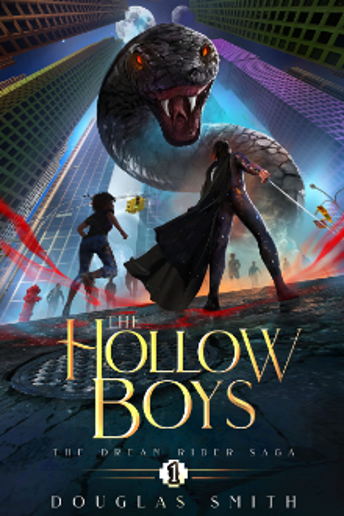
Award-winning Canadian YA superhero fantasy. Features an orphaned boy billionaire with dream powers. He gets into a romance with an orphaned homeless girl with whom a mysterious voice communicates, giving her a sort of preternatural sixth sense.
They meet because of a kidnapping scheme. The titular Hollow Boys are street kids who are victims of possession. A Morgan Le Fay villainess has been kidnapping them to serve as hosts for her evil undead wizard boyfriend. The homeless girl’s little brother gets kidnapped for this purpose.
I was surprised by the amount of sex and nudity. The voice is otherwise distinctly YA. But I think I’m always surprised when YA books get to have sex in them. I guess that was less normal when I was a teenager, so I’m not used to it.
A College of Magics by Caroline Stevermer
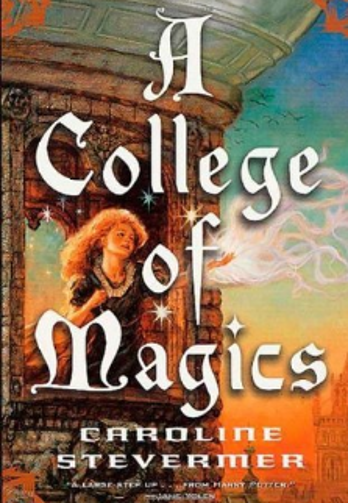
My favorite book this month!
All the word-of-mouth stuff I heard was so misleading. Here’s what I wish I was told: Only the first arc takes place at the magic school. The students are adults. It’s set in 1908. The heroine is heir to a rustic duchy that’s like a made-up Scandinavian country. She menaces a thug with a fireplace poker. Her motivation is her sense of responsibility for her land and people. Her best friend is a sophisticated witch whose specialties are organizing support and turning bombs into hats. Her love interest is the bodyguard who swore her fealty. There’s a wicked princess-witch, a wicked uncle, and a big scoop of familial political intrigue.
I do not typically read historical fiction, particularly not historical fiction set in Europe, featuring nobility. This is that, so a lot of the elements were very fresh to me. Also, I love love loved the heroine and her best friend. I should have read this book years ago.
The Long Earth by Stephen Baxter and Terry Pratchett
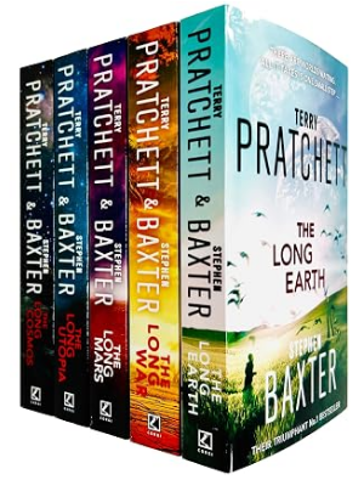
My summary is about to belie my thesis, but I swear this book did not have enough going on to sustain its wordcount. Despite the omniscient narrator’s frequent excursions to visit side characters. (Some of those side characters recur. Others are never seen again.) You’ll notice that, somehow, there are still four sequels.
Principally, The Long Earth is about a guy named Joshua Valienté, who was born as the only human in an empty world. During labor, his mother accidentally discovered she had the ability to ‘step’ to other realities. The Long Earth is all of these alternate versions of our universe, stacked end-to-end to infinity. Joshua’s mother stepped one world over, pushed out her baby, and accidentally left. The few short moments of utter aloneness that Joshua experienced then define the rest of his life. Also life-defining: his mother, after returning and rescuing him, bled out, so he was raised by nuns. The kind of nuns who shelter anarchists and ride motorcycles.
The Long Earth opened to everyone when Joshua was ten. Mysteriously, a scientist released schematics for a stepping device on the internet. It’s simple to make. The power source is a potato. Within hours, people flicked their stepper’s switch and disappeared from all over Earth—to reappear on the next earths over. Joshua helped panicked children back home to safety, kickstarting his reputation for heroics.
The Earths beyond ours are wild; they’re slideshows of unexploited natural resources. It turns out our world is a ‘Joker’—a freak accident. Because we exist. Nowhere else in the Long Earth are Homo sapiens found.
However, on those other earths, we have thriving cousins. And there are stranger creatures still, on worlds millions of steps away. Joshua is recruited by an artificial superintelligence from our world—who identifies as a reincarnated Tibetan motorcycle repairman—to travel far into the Long Earth on the first stepping zeppelin. An expedition to find the strangest things in reality.
You’d think this would be a super cool fun adventure.
But mostly, they see a lot of trees. There is simply too much flying around on the zeppelin. The flying around is punctuated by shock developments that don’t go anywhere. Book one is all about surprising the reader with new plot threads. The most egregiously shocking of these appear in the final quarter. Could we have please just cut some of the tree content to move those threads up and follow them somewhere before book 2? It really feels like the authors were dithering around, discovery-writing the plot.
Still, there were things I liked. Joshua’s fun. And one of the recurring side characters who gets her own chapters is Madison, Wisconsin’s lesbian crossworlds detective. She’s great. I could read more about her. But trawling the internet for spoilers revealed to me that the plot thread issue is perennial. The sequels also wham the reader with new threads instead of following up on established ones. This is why I prefer standalone books to series.
SPOILER: The most egregious examples of WHAMMING us with new plot threads— At the end of book 1, just when we think we’re out to solve the cosmic mystery of the strangest mind at the far reaches of the Long Earth, instead, Madison, WI gets nuked. At the end of book 2, the Yellowstone caldera erupts. That’s basically an even bigger and badder nuke event. Please don’t drop your nuclear bombs at the 95% mark if we’re meant to be invested in the fallout.